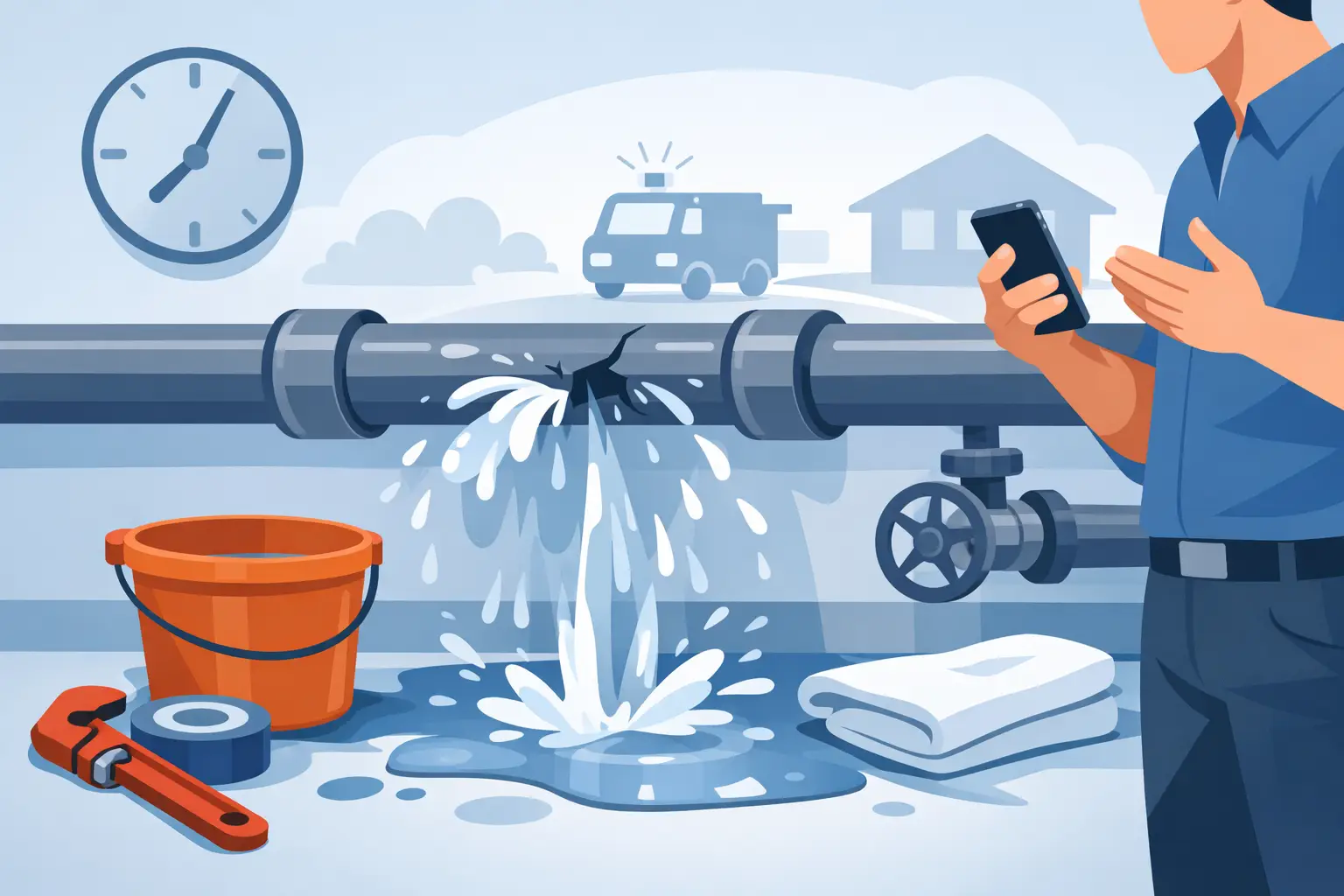
A burst pipe can turn a normal morning into a flooded kitchen, soaked carpet or water running through the ceiling within minutes. Fast burst pipe repair starts with one priority: stop the water at the source, then get a licensed emergency plumber on the way before the damage spreads.
Whether the pipe has failed under the sink, inside a wall, beneath the slab or near the hot-water system, acting early can protect your flooring, cabinetry, electrical fittings and belongings. If water is already pooling, do not wait to see whether it slows down. It rarely fixes itself.
What to do in the first 15 minutes
Find and turn off your water supply immediately. Most Sydney homes have a main isolation valve near the water meter at the front of the property, although units and townhouses may have an individual isolation valve in a service cupboard, laundry or meter room. Turn the valve clockwise until it stops. If the leak is isolated to a toilet, tap, dishwasher or hot-water system, you may be able to turn off the local valve instead.
Once the water is off, open a cold tap at the lowest point in the home, such as an outdoor tap or laundry tap. This helps release pressure and drain residual water from the pipework. Keep children and pets clear of wet areas, particularly if water is near power points, appliances or electrical leads.
If water has reached electrical fittings, switch off power at the main board only if it is safe to do so and you can reach it without standing in water. Never touch wet wiring, attempt to remove a light fitting or use electrical appliances in the affected area. Call an electrician as well if there is any concern about electrical damage.
Move rugs, furniture, boxes and valuables out of the wet area where practical. Use towels, mops and buckets to contain water, but do not pull apart walls, ceilings or cabinetry in an attempt to locate the break. A pipe may be under pressure, and opening up the wrong area can make a stressful situation worse.
Signs a pipe has burst behind a wall or ceiling
Not every burst pipe announces itself with a dramatic spray of water. Hidden leaks can cause significant damage before they are visible, especially in older homes or properties with pipework running through wall cavities and roof spaces.
Watch for a sudden drop in water pressure, a hissing sound behind a wall, damp or bubbling paint, stains on the ceiling, warped skirting boards, soft plasterboard or unexplained puddles. A water meter that continues to move when every tap and appliance is turned off is another strong warning sign.
A musty smell can also point to water sitting inside a wall, beneath flooring or in insulation. At that stage, stopping the leak is only part of the job. The area needs proper fault finding, repair and drying to reduce the risk of mould and ongoing building damage.
Why pipes burst in Sydney properties
Pipes fail for different reasons, and the right repair depends on what caused the break. Corrosion can weaken ageing galvanised or copper pipes from the inside. Tree roots may damage underground water services. Ground movement, poor original installation, high water pressure and accidental drilling during renovations can all create a weak point.
Flexible hoses are another common problem. A worn or poorly fitted hose beneath a basin, behind a washing machine or connected to a dishwasher can split without warning. Hot-water pipework can also be affected by age, pressure issues or a failing temperature and pressure relief valve.
The visible split is not always the full problem. Simply patching a corroded section without checking nearby pipework may get the water running again, but it can leave you facing another leak shortly afterwards. A qualified plumber should assess the pipe material, its condition and the surrounding installation before recommending the repair.
How professional burst pipe repair is carried out
A proper burst pipe repair begins with isolating the supply and confirming where the water is escaping. For an obvious exposed pipe, this may be straightforward. For a concealed or underground leak, a plumber may use pressure testing, acoustic leak detection, thermal imaging or targeted inspection to narrow down the fault without unnecessary damage to walls, floors or landscaping.
Once the fault is located, the damaged section is removed and replaced with suitable pipework and fittings. The repair must be correctly joined, supported and tested under pressure. If the pipe has burst due to excess pressure, the plumber should also investigate the pressure-reducing valve, tempering valve or hot-water system rather than treating the split pipe as an isolated issue.
For underground leaks, the work may involve carefully excavating the affected section or considering a less invasive repair method where suitable. The best approach depends on pipe access, depth, material, the condition of the line and whether repeated failures suggest that replacement is the more sensible long-term option.
After the repair, the water supply is restored and tested. A professional should check for further leaks, confirm normal water pressure and explain what was repaired. If water has entered walls, ceilings or flooring, arrange drying and restoration promptly. Plumbing repairs stop the source of water, but building materials may still need attention.
Repair or replace: making the right call
A single damaged section of otherwise sound pipework can often be repaired quickly and cost-effectively. This is common where a pipe has been accidentally punctured, a fitting has failed or a flexible hose has split. In those cases, targeted replacement is usually the practical choice.
Replacement may be the better investment when pipes are heavily corroded, multiple leaks have occurred, water pressure is damaging the system or the property still has ageing galvanised pipework. Repeated call-outs can become more expensive and disruptive than upgrading a problem section properly.
For landlords and property managers, documenting the cause of the failure and the repair performed is particularly useful. It gives you a clearer maintenance record and helps support decisions about future upgrades. Tenants should report leaks as soon as they notice them, even if the water appears minor. A small damp patch can become a much larger insurance and repair issue very quickly.
Avoid temporary fixes that create bigger problems
Tape, putty, clamps and improvised hose repairs may reduce a drip for a short period, but they are not a reliable solution for a burst pipe. They can conceal the problem while water continues to travel through wall cavities or beneath flooring. Never use a temporary patch as a reason to turn the mains water back on and leave the property unattended.
It is also risky to cut into walls or dig up pipework without knowing the exact fault location. Apart from damaging the home, you could strike electrical wiring, gas services or other plumbing lines. Accurate fault finding is usually faster, cleaner and less costly than guessing.
Get urgent help before water damage escalates
When a pipe bursts, you need clear advice, fast attendance and a repair that addresses the cause. Tru Blu Plumbing provides 24/7 emergency plumbing across Sydney, including Penrith and the Hills District, with licensed and insured work, upfront pricing and practical fault finding for urgent water leaks.
If you have shut off the water, take a few photos of the affected area for your records and let the plumber know where the leak is visible, whether the water is hot or cold, and whether power has been affected. That information can help the technician arrive prepared.
A burst pipe does not have to become a full-scale property disaster. Shut off the water, keep the area safe and arrange qualified help quickly - the sooner the fault is repaired and the area is dried, the easier it is to protect your home.