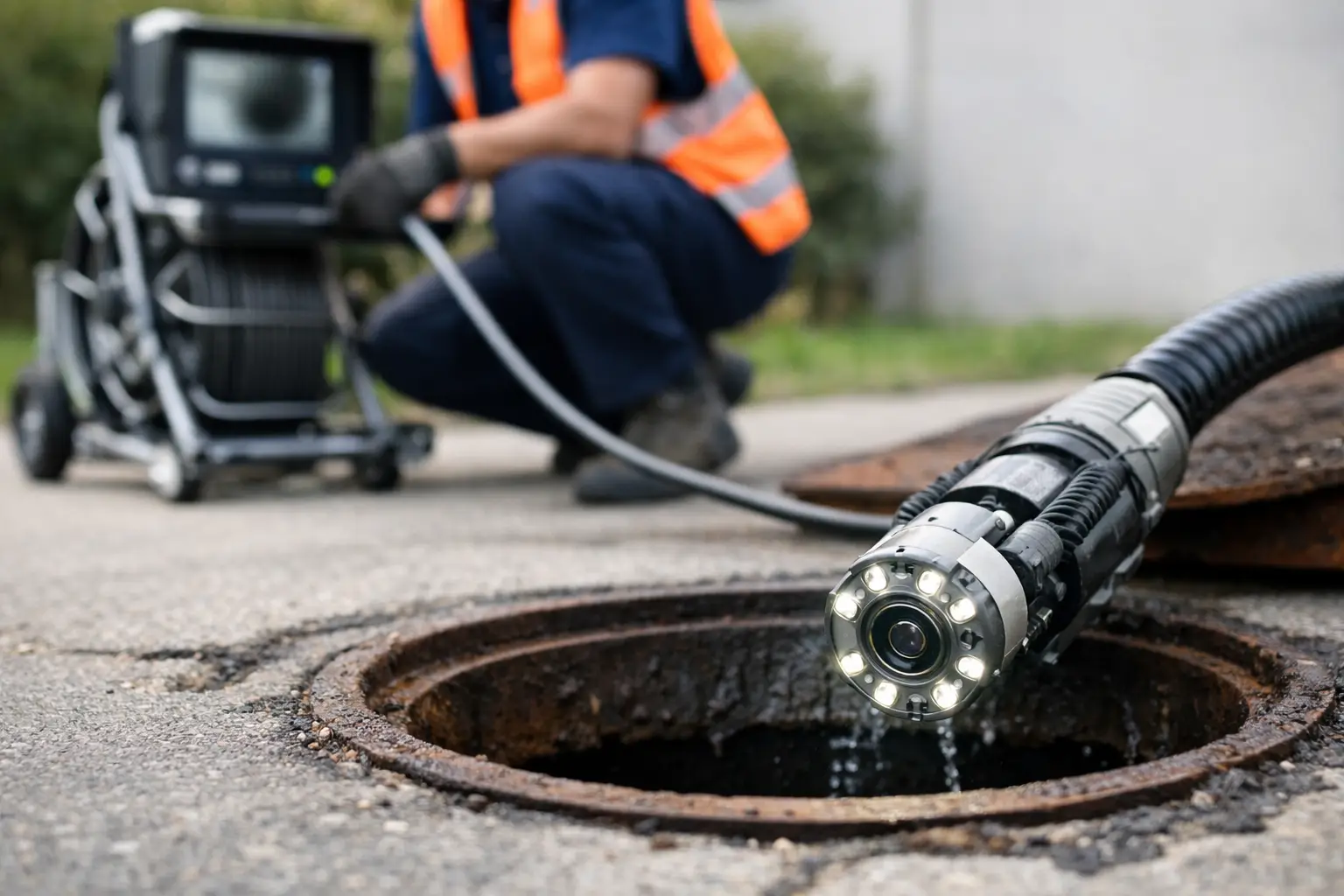
A blocked drain is frustrating. A drain that blocks again a few weeks later is a warning that the real fault has not been found. A CCTV drain inspection gives a licensed plumber a clear view inside the pipework, replacing guesswork with evidence. For Sydney homes, rental properties, strata buildings and commercial sites, it can be the quickest way to identify what is happening below ground before a minor drainage issue turns into sewer overflow, property damage or an expensive excavation.
What a CCTV drain inspection actually shows
A drain camera is fed through an existing drain access point, sewer opening or inspection shaft. It sends live footage from inside the pipe to a monitor while the plumber tracks its progress through the drainage line. The camera can show where the pipe is blocked, damaged, misaligned or holding water.
This is not simply a way to confirm that a drain is clogged. It helps identify the reason for the blockage and the condition of the pipe around it. Common findings include tree root intrusion, grease build-up, sanitary products and foreign objects, cracked pipe sections, collapsed pipes, offset joints and poor pipe fall. In older Sydney properties, earthenware pipes and ageing connections are frequent sources of repeat problems.
Where required, a locating device can trace the camera position from above ground. This helps pinpoint the depth and location of a fault before repairs begin. Instead of digging up a large section of lawn, driveway or flooring to search for the issue, the repair can be planned around the confirmed problem area.
When you should book a CCTV drain inspection
A camera inspection is particularly useful when a drain issue is recurring, severe or difficult to explain. If water is backing up through a floor waste, toilet or shower drain, prompt fault finding matters. Continuing to use fixtures connected to the affected line may cause an overflow inside the property.
You should also consider an inspection when high-pressure drain cleaning clears the pipe but the blockage returns. Jetting can remove roots, scale, grease and debris, but it cannot repair a cracked, displaced or collapsed pipe. If there is structural damage, clearing the obstruction alone may only provide short-term relief.
For landlords, strata managers and property managers, CCTV footage can provide a useful record of the issue and the recommended repair. It makes it easier to explain why work is needed, particularly where a drainage line serves multiple lots or runs beneath common property. It can also assist when planning maintenance rather than waiting for the next emergency call-out.
Other situations where an inspection is worthwhile include suspected tree roots, unpleasant sewer odours, slow drainage across several fixtures, a gurgling toilet, sinkholes or soft ground near a sewer line, and unexplained wastewater overflow. At a commercial premises, regular drainage faults can disrupt staff, customers and trading hours, so identifying the underlying cause quickly is often the sensible option.
A camera inspection is not always the first step
It depends on the condition of the drain. If a line is completely blocked and the camera cannot pass through it, a plumber may need to clear the blockage first using high-pressure water jetting. Once there is a path through the pipe, the camera can inspect the line properly and determine whether repair work is needed.
Likewise, a simple one-off blockage caused by an obvious item may not require a full investigation. A professional plumber should explain what has been found, what can be cleared immediately and whether CCTV inspection will add genuine value before proceeding.
Problems a drain camera can uncover
Tree roots are one of the most common causes of damaged and blocked sewer drains. Roots naturally seek moisture and can enter through tiny gaps at pipe joints or cracks. Once inside, they trap toilet paper, waste and other debris until the line begins to back up. High-pressure cleaning can cut and flush root masses, but repeated root growth usually indicates the pipe has openings that need repair or replacement.
A CCTV camera can also reveal pipe movement. Ground settlement, heavy vehicle loading, poor installation and ageing materials can cause joints to separate or sections of pipe to drop out of alignment. Waste may still pass through for a time, but solids catch on the uneven edge and blockages become more frequent.
Cracks and collapses need a different response again. A cracked pipe may allow wastewater to escape into surrounding soil, while a collapsed section can prevent flow entirely. The footage helps distinguish between a localised repair and a larger sewer replacement. That distinction matters when comparing cost, disruption and the expected life of the repair.
Not every issue is a broken pipe. Fat, oil and food waste can build up in kitchen drainage, especially in homes and businesses with older lines. In bathrooms, hair, soap residue and unsuitable items flushed down toilets can restrict flow. A camera inspection shows whether cleaning is likely to be a lasting solution or whether there is another fault causing debris to collect in the same spot.
Why accurate diagnosis can reduce repair costs
The value of a CCTV inspection is not just the footage. It is the ability to make a repair decision based on the actual condition of the drainage system. Excavation without accurate locating can mean unnecessary digging and restoration work. Repeated call-outs to clear the same line can also cost more over time than identifying and fixing the defective section.
Once the fault is confirmed, the right repair may involve high-pressure cleaning, targeted excavation, replacing a damaged pipe section, relining where suitable, or a full sewer renewal for widespread deterioration. There is no one-size-fits-all answer. Pipe material, depth, access, the extent of damage and the presence of nearby structures all affect the best approach.
A clear explanation is especially important before major drainage work. You should know what the camera found, where the fault sits, what repair options are available and what each option is intended to solve. The cheapest immediate option is not always the best long-term option, particularly when roots or collapsed pipework are involved.
What happens during the appointment
A professional inspection begins with assessing the symptoms and checking available drainage access points. The plumber will then feed the CCTV camera through the relevant line and monitor the footage as it travels through the pipe. If a blockage prevents access, drain cleaning may be completed first.
After the inspection, the findings should be explained in plain English. This includes whether the line is clear, the location of any obstruction or defect, and the next recommended step. For significant faults, recording the footage and locating the issue from the surface can support an accurate repair plan.
The process is generally far less disruptive than exploratory digging. However, access conditions still matter. Covered inspection openings, extensive landscaping, internal plumbing access and the depth of underground lines can affect how quickly the inspection and any repair can be completed.
Avoid waiting for a complete sewer backup
Slow drainage, gurgling fixtures and occasional bad smells are easy to put off when they come and go. But drainage faults rarely correct themselves. A partial blockage can become a full blockage with little warning, often at the most inconvenient time.
If your drain is repeatedly blocking, wastewater is backing up, or you suspect roots or damaged pipework, book a qualified technician before the issue gets worse. Tru Blu Plumbing Group provides CCTV drain inspections and targeted drainage repairs across Western Sydney, South-West Sydney, the Hills District and North-West Sydney, with clear advice on the most practical next step for your property.
A timely camera inspection can turn an uncertain drainage problem into a defined repair plan, giving you the information needed to act before a small warning sign becomes an urgent mess.