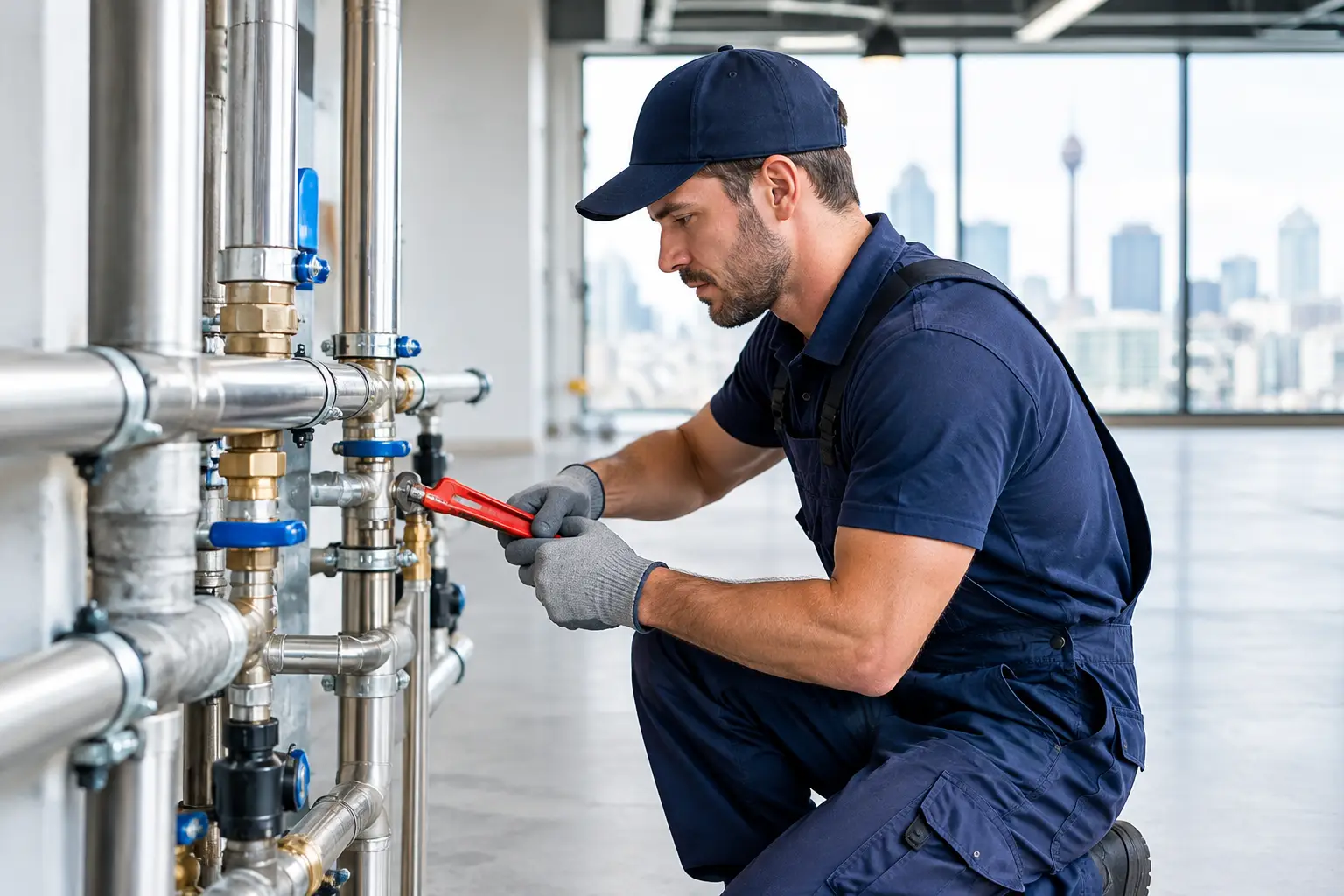
A blocked toilet before the lunch rush, a burst pipe above stock, or no hot water for staff can bring a business to a standstill fast. Commercial plumbing is not simply a larger version of household plumbing. It needs a fast, practical response that protects people, premises, trade and your reputation.
For business owners, strata managers and property managers, the priority is clear: contain the problem, find the actual cause and get the site operating safely again. Waiting for a minor leak or slow drain to become an emergency usually costs more in repairs, clean-up, lost trade and tenant disruption.
What Makes Commercial Plumbing Different?
Commercial premises often have higher water use, more fixtures, larger drainage systems and less room for downtime than a home. A café may depend on functioning grease waste lines. An office building needs accessible, reliable bathrooms for staff and visitors. A warehouse may have amenities, wash-down areas, trade waste connections and hot-water systems all working across long operating hours.
The visible issue is not always the source of the fault. Water appearing through a ceiling can come from a leaking pipe, failed waterproofing, a damaged drainage line or an overflowing fixture on another level. A toilet that repeatedly blocks may point to a local obstruction, but it can also indicate a cracked sewer pipe, tree root intrusion or poor drainage falls.
That is why accurate fault finding matters. A licensed commercial plumber should assess the system rather than repeatedly treating the symptom. CCTV drain inspections can identify what is happening inside inaccessible pipework, while high-pressure water jetting can clear stubborn blockages without unnecessary excavation in many situations.
Commercial Plumbing Problems That Need Fast Action
Some plumbing faults can be scheduled around business hours. Others should be treated as urgent, particularly where there is active water damage, sewage, gas or an inability to provide safe amenities.
A burst pipe or uncontrolled water leak needs immediate isolation. Even a pinhole leak can damage plasterboard, flooring, electrical systems, stock and neighbouring tenancies over time. If safe to do so, turn off the relevant water supply and keep people away from affected electrical areas while a plumber attends.
Overflowing toilets and sewage backups also require prompt attention. Aside from the obvious disruption, contaminated water creates a hygiene risk for staff, customers and residents. Do not keep flushing in the hope the blockage will clear. Stop using affected fixtures, prevent access to the area and arrange emergency plumbing support.
Blocked drains are another common cause of lost trade. In commercial kitchens, food waste, fats and grease can gradually restrict drainage. In offices, retail sites and strata buildings, wipes, sanitary products, paper towel and foreign objects can block shared lines. High-pressure drain cleaning is often the right solution, but the cause should be confirmed if blockages return.
Gas faults are never a wait-and-see problem. If you smell gas, hear hissing near gas equipment or suspect a gas leak, avoid flames and electrical switches, isolate the supply only if it is safe, move people away and contact a licensed gas plumber urgently. Gas work must be completed by appropriately licensed professionals.
Planned Commercial Plumbing Saves Disruption
Emergency repairs are sometimes unavoidable, but many expensive call-outs begin as warning signs that were ignored. Slow drainage, gurgling pipes, damp patches, fluctuating hot-water temperatures and unexplained water bills all deserve investigation before they affect operations.
A planned maintenance approach is particularly useful for strata properties, busy workplaces, hospitality venues, medical practices, retail centres and investment properties. The right schedule depends on the building, its age, water use, drainage layout and the consequences of a shutdown. A small office may only require periodic checks, while a high-use site can benefit from more frequent drain maintenance and fixture inspections.
A practical maintenance plan may include CCTV drain inspections where recurring blockages are a concern, high-pressure cleaning of problem lines, leak checks, testing of hot-water performance, inspection of exposed pipework and checks on toilets, taps and isolation valves. It also creates a record of past work, which is useful when managing multiple tenancies or planning future repairs.
The trade-off is straightforward. Scheduled maintenance has a cost, but it gives you more control over timing. Emergency failures tend to happen when the premises is busiest, and repairs may involve water damage, after-hours access, cleaning and operational disruption on top of the plumbing work itself.
When Repair Is Enough and When Replacement Makes Sense
Not every issue requires replacement. A leaking tap, failed valve, damaged section of pipe or faulty hot-water component can often be repaired efficiently. Where pipework is generally sound and the problem is isolated, a targeted repair is usually the sensible option.
Replacement becomes more practical when faults keep returning, the pipework is severely corroded, a sewer line has extensive cracking or root damage, or a hot-water system is becoming unreliable. Repeated small repairs can become false economy if the underlying asset is near the end of its service life.
For drainage problems, CCTV footage helps guide this decision. It can show whether a line has a simple blockage that can be jetted clear or whether there are breaks, displaced joints, collapsed sections or persistent root intrusion requiring sewer repair or replacement. This evidence gives owners and managers a clearer basis for approving work rather than guessing from the surface symptoms.
Hot-water decisions also depend on demand. A system that works adequately for a small tenancy may not keep up after a fit-out, staff increase or change in business use. A plumber can assess the existing system, usage pattern, installation requirements and available energy source before recommending repair, replacement or a more suitable capacity.
Choosing a Commercial Plumber for Your Property
Commercial work calls for more than a quick fix. You need a licensed and insured plumber who communicates clearly, can work around site requirements and has the equipment to investigate properly. For property managers and strata managers, that also means receiving clear information about the issue, the recommended solution and any work needed to prevent recurrence.
Ask whether the plumber can provide services relevant to your site, including emergency repairs, drainage diagnostics, sewer work, hot-water repairs, gas plumbing and ongoing maintenance. A team with CCTV drain inspection equipment and high-pressure water jetting capability can often diagnose and resolve drainage faults without relying on guesswork.
Pricing should be discussed upfront wherever possible. The final scope can sometimes change once concealed pipework or drains are inspected, but you should understand what has been found, what work is recommended and why. Clear communication is especially important where approvals are required from owners, strata committees or landlords.
For businesses across Western Sydney, South-West Sydney, the Hills District and North-West Sydney, Tru Blu Plumbing Group provides licensed commercial plumbing support for urgent faults, planned maintenance and larger repair works. The focus is on locating the problem accurately, explaining the options plainly and getting your premises back to normal with minimum disruption.
Keep a Small Fault From Becoming a Site Closure
Your team is often the first to notice a plumbing problem. Encourage staff or tenants to report slow drains, toilet issues, water marks, strange smells and changes in hot-water performance early. They do not need to diagnose the issue, but early reporting gives you time to act before the problem affects customers or damages the property.
Keep isolation valve locations documented and make sure authorised staff know what to do during a leak or overflow. Do not attempt repairs beyond basic isolation and safe clean-up. Incorrect work can worsen damage, create compliance issues and delay the proper repair.
When water, sewage, gas or hot water is affecting your premises, book a licensed technician promptly. A fast inspection and the right repair can protect your building, keep your people safe and help your business stay open.