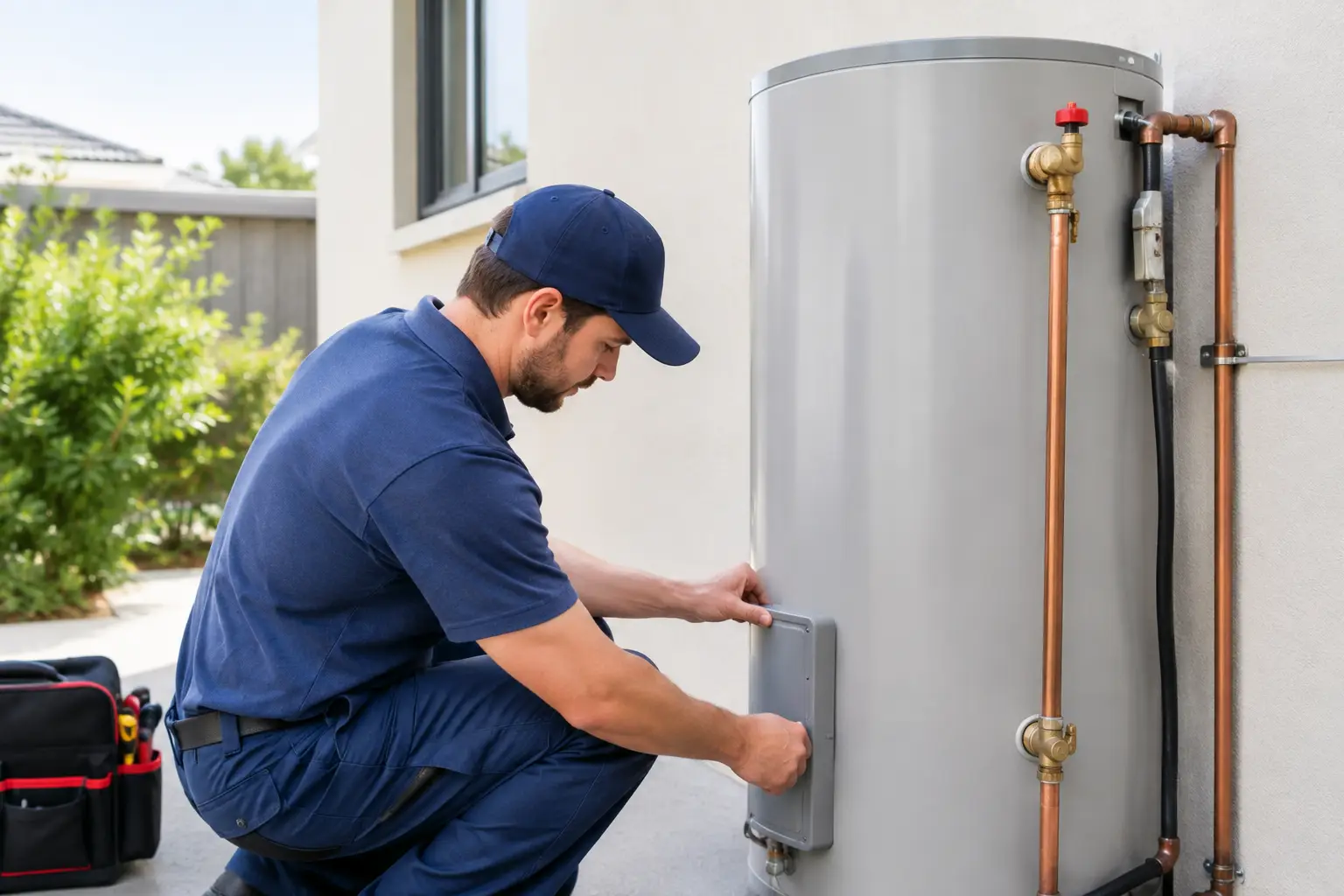
A cold shower is usually the first warning, but it is rarely the only one. Rusty water, a leaking tank, unreliable temperature or a hot water unit that trips the power can all mean an electric hot water system replacement is the safer and more cost-effective option. For Sydney homes, rentals and commercial properties, acting before the tank fails completely can prevent water damage, lost trading time and the stress of having no hot water.
When an electric hot water system should be replaced
Most electric storage hot water systems give clear signs as they near the end of their service life. A small amount of water from the temperature pressure relief valve can be normal during heating cycles. Water pooling around the base of the tank is different. It may indicate corrosion inside the cylinder, and a corroded tank cannot generally be repaired reliably.
Age matters too. Many electric storage systems last around 8 to 15 years, although water quality, installation conditions, maintenance and usage all affect the result. If an older unit needs a major repair, such as a new cylinder or repeated electrical component repairs, replacement often makes more financial sense than putting more money into a failing system.
Arrange professional fault finding if you notice any of the following:
- Hot water running out much sooner than it used to
- Brown, rusty or metallic-smelling hot water
- Water around the tank, pipework or relief valve
- A rumbling, popping or banging sound while the unit heats
- A circuit breaker or safety switch that trips when hot water is heating
- No hot water after the usual off-peak heating period
Not every fault means the whole unit has failed. A thermostat, element, tempering valve, relief valve or electrical supply issue may be repairable. A licensed technician should inspect the system before recommending replacement, particularly where the tank is not leaking and the unit is still relatively new.
Choosing the right electric hot water system replacement
The right replacement is not simply the biggest tank that fits in the cupboard or side passage. It needs to suit the household's hot water demand, available space, electrical supply, plumbing layout and budget.
Storage capacity and household demand
Electric storage units are common across Western Sydney homes because they are familiar, dependable and available in a range of sizes. A smaller household may be well served by a compact tank, while a family with several bathrooms, teenagers and regular washing loads will usually need more stored hot water.
Usage patterns matter as much as the number of people. A household that showers one after another in the morning places a far heavier demand on the system than one where showers are spread across the day. A plumber will consider bathroom numbers, shower flow rates, appliances and peak-use times before sizing the unit. Oversizing adds purchase and heating costs; undersizing leads to cold showers and unnecessary frustration.
Electric storage, instantaneous or heat pump?
A like-for-like electric storage replacement is often the quickest and most straightforward choice, especially if the existing location and electrical setup are suitable. It provides stored hot water ready for normal household use and can be a practical option when a failed unit needs to be changed promptly.
Instantaneous electric systems heat water as it passes through the unit. They can save space, but they may require substantial electrical capacity and may not be appropriate for every property. Their performance depends on the incoming water temperature, flow rate and the unit's electrical rating.
A heat pump hot water system uses electricity differently, drawing heat from the surrounding air to heat water. It can reduce running costs for suitable households, but it needs an appropriate outdoor location, produces some operating noise and may have a higher upfront cost. Available rebates and eligibility conditions can change, so check the current requirements before making a decision based on incentives.
Location and access are part of the job
The replacement unit must be installed on a suitable base with safe access for servicing. A tank in a tight under-stair space, on a balcony, in a ceiling cavity or beside a boundary may require extra planning. Pipework may need alteration, a drain line may be required for the relief valve, and the new unit may not have the same dimensions as the old one.
This is why a proper site assessment is valuable. It identifies access issues, confirms whether the existing valves and pipework are in good condition, and avoids surprises on installation day.
What happens during electric hot water system replacement
A professional replacement begins with confirming the fault and selecting a suitable unit. The water supply and power are isolated, the old system is drained, then the plumber disconnects the water services and removes the unit safely. The new system is positioned, connected to the cold-water supply and hot-water line, fitted with the required valves and discharge pipework, filled and tested for leaks.
A tempering valve is a key safety component in many domestic installations. It blends hot and cold water to deliver water at a safer temperature to bathrooms and other required outlets, while the tank stores water at a higher temperature for hygiene. If the existing valve is worn, incorrectly set or unsuitable, it should be addressed as part of the work.
Electrical connections must be completed or checked by an appropriately licensed electrical professional. Depending on the replacement, this may involve reconnecting the existing supply, assessing the circuit or arranging electrical upgrades. Never attempt to wire, isolate or bypass an electric hot water system yourself. Water, high voltage and damaged wiring are a dangerous combination.
Once installed, the system needs time to heat. A storage tank may not provide a full tank of hot water immediately, particularly if it is connected to off-peak electricity. Your technician should explain the expected heat-up time, operating controls and what to watch for after installation.
Avoiding damage while you wait for help
If the tank is leaking heavily, switch off the electrical supply at the switchboard only if it is safe to do so and you can identify the correct circuit. Do not stand in water to access electrical equipment. Turn off the cold-water isolation valve to the hot water unit if it is accessible and safe, then move valuables away from the area.
For a slow leak, place a container under the drip only as a temporary measure. Do not tape over the relief valve discharge pipe or cap it. The valve is a safety device, and blocking it can create a serious pressure risk.
For no hot water with no visible leak, avoid repeatedly resetting a tripped breaker. One reset may be reasonable after checking there is no water near electrical equipment, but continued tripping requires professional investigation. The cause could be a failing element, thermostat, wiring fault or moisture affecting the system.
Replacement planning for landlords and strata managers
A hot water failure at a rental property needs prompt action. Tenants should have clear instructions on isolating a leak safely and reporting loss of hot water straight away. Delaying a leaking cylinder can damage flooring, cabinetry, wall linings and neighbouring lots, especially in strata buildings.
For property managers and strata committees, keep a record of the unit's age, capacity, service history and previous faults. This makes approvals faster and helps determine whether a planned upgrade is preferable to an emergency replacement. In apartment buildings, access restrictions, common-property pipework and electrical arrangements may also affect the scope of work.
What affects the cost of replacement?
The cost of an electric hot water replacement depends on more than the tank price. Capacity, brand, access, removal of the old unit, changes to pipework, valve upgrades, base repairs and electrical work can all affect the final figure. A straightforward like-for-like ground-level replacement is usually less involved than replacing a large unit in a difficult location or changing to a different system type.
Ask for clear advice on what is included before work starts. A transparent quote should explain the selected unit, installation work, any likely additional requirements and disposal of the old system. The cheapest option is not always the best value if it leaves old valves, unsuitable pipework or an undersized tank in place.
Get the replacement done before the leak gets worse
When hot water becomes unreliable, early action gives you more choices. You can compare suitable systems, plan access and choose a replacement that suits the property rather than accepting whatever is available during a complete failure. If the tank is leaking or the power is tripping, treat it as urgent and book a licensed technician.
Tru Blu Plumbing Group provides responsive electric hot water system replacement across Western Sydney, South-West Sydney, the Hills District and North-West Sydney. A proper assessment, clear pricing and licensed installation will get your hot water back on safely - and help you avoid a small fault becoming a damaged home or disrupted property.