A gas smell near the cooktop, a hot-water system that will not stay lit, or a heater that has started behaving differently is not a job to put off until the weekend. Professional gas fitting services protect your property, the people inside it and your gas appliances. The right response is quick fault finding by a licensed gas fitter, clear advice on the repair, and workmanship that fixes the cause rather than masking the symptom.
For homeowners, landlords, strata managers and businesses across Western Sydney, gas issues can be disruptive without always being obvious. A small leak may create a noticeable odour. A faulty appliance may simply lose efficiency, take longer to heat water or keep cutting out. Either way, gas work needs the right training, testing equipment and licensing. It is never a DIY repair.
What gas fitting services cover
Gas fitting is more than connecting a new cooktop. It covers the pipework, valves, regulators and appliance connections that safely deliver gas to hot-water systems, ovens, heaters, BBQ points and commercial equipment. It also includes testing the system after work is completed to confirm it is operating safely.
A licensed gas fitter can diagnose leaks, repair damaged pipework, replace ageing fittings, isolate unsafe sections of a gas line and install new gas appliances. Where required, they can also provide the relevant compliance documentation. The best approach depends on the age of the property, the condition of the pipework, the appliance involved and whether the issue is isolated or affecting the wider system.
At older Sydney homes, for example, corroded external pipework or tired connections may be the problem. In a renovated kitchen, the work may involve safely relocating a gas point to suit a new appliance layout. For commercial premises, gas fitting often requires careful planning to minimise disruption to trading hours while keeping safety at the centre of the job.
Gas leak detection and repairs
Gas leaks require immediate attention. The familiar sulphur-like smell is deliberately added to natural gas so leaks are easier to detect, but not every issue is dramatic. Hissing sounds near a pipe, unexplained appliance problems or a gas bill that has increased without a clear reason can also point to a fault.
A professional gas fitter will inspect the installation, carry out pressure testing and use appropriate leak detection methods to identify the source. Once located, the repair might be as straightforward as replacing a damaged connection. In other cases, a section of pipe may need replacement, particularly where corrosion or physical damage has compromised the line.
If you smell gas, turn off the gas supply if it is safe to do so, avoid flames and electrical switches, move people away from the area, and contact a licensed gas professional urgently. If there is an immediate danger, contact emergency services or your gas network emergency line first.
Appliance installation and upgrades
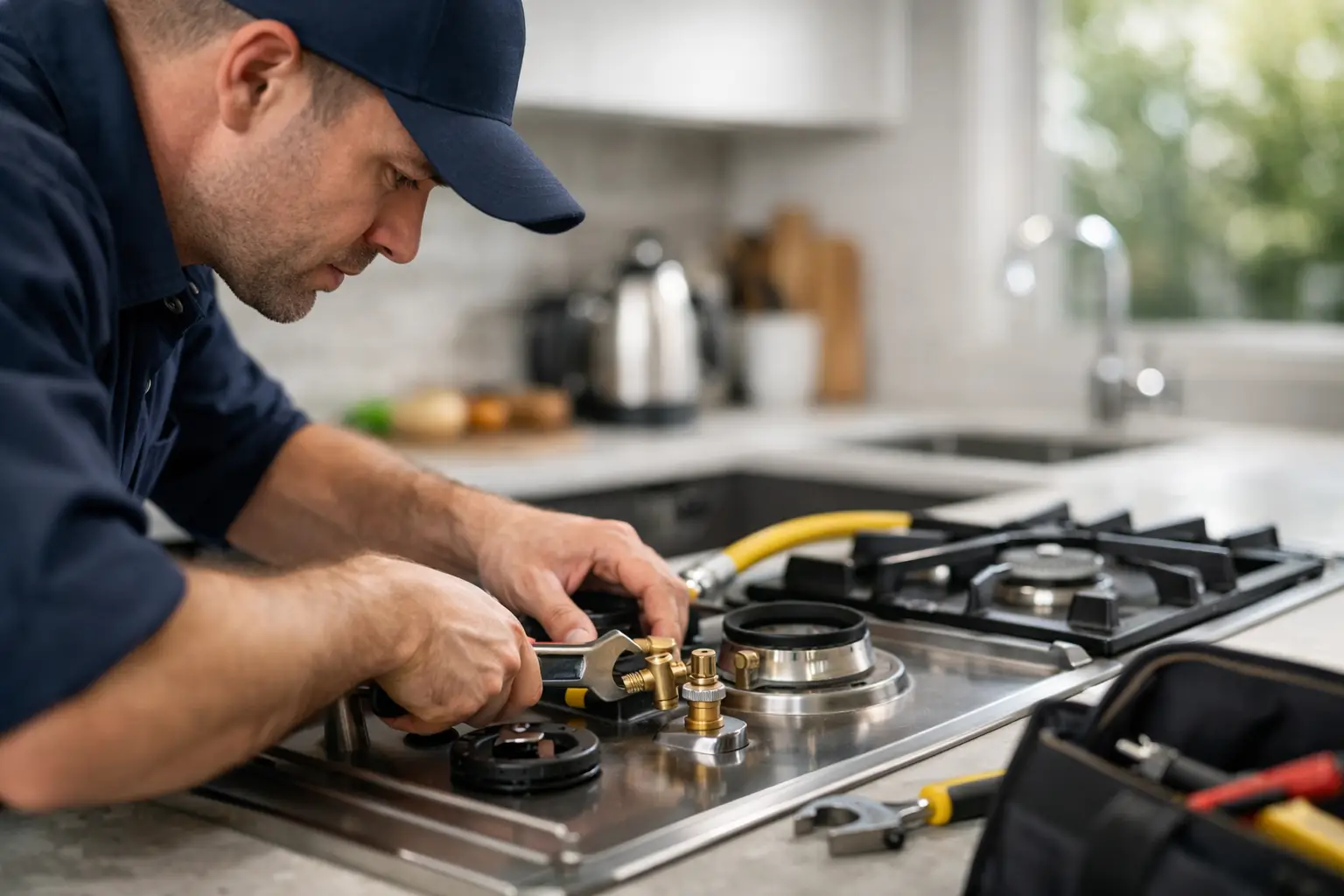
A new gas cooktop, oven, bayonet point, gas heater or continuous-flow hot-water system must be installed correctly from the start. This includes checking gas supply capacity, positioning, ventilation requirements, safe clearances and the condition of existing pipework. Connecting an appliance without addressing these details can create performance and safety problems later.
An upgrade is also a good time to assess whether your current system suits the property. A larger household may benefit from a different hot-water solution, while a small unit may not need the same capacity as a family home. Running costs, available space, existing gas infrastructure and hot-water demand all matter. A practical recommendation should be based on how the property is actually used, not just the appliance on special.
When to book gas fitting services
Do not wait for a complete failure before arranging an inspection. Gas systems often give warning signs, and acting early can prevent a small repair becoming an urgent call-out or a replacement job. Book a licensed gas fitter if you notice any of the following:
- A gas odour around an appliance, meter, gas bayonet or external pipework.
- A pilot light that repeatedly goes out or a burner flame that is yellow, weak or uneven.
- Hot water that fluctuates, runs cold unexpectedly or takes far too long to heat.
- Visible rust, damage or deterioration on gas pipes, valves or appliance connections.
- A planned kitchen, laundry, hot-water or heating installation that requires new or altered gas lines.
For landlords and property managers, prompt action is especially important. Tenants need safe, working hot water and appliances, while delays can increase property damage, interrupt occupancy and create avoidable stress. Scheduling repairs early, keeping clear records and using a licensed, insured contractor helps keep maintenance decisions straightforward.
Why licensing and testing matter
Gas work is not simply plumbing with a different pipe. Incorrect sizing, poor connections, inadequate appliance commissioning or a missed leak can have serious consequences. A licensed gas fitter understands the regulations and technical standards that apply to gas installations, as well as the fault-finding process needed when an appliance is not operating as it should.
Testing is a critical part of the job. A repair should not finish when a fitting has been tightened or a pipe has been replaced. The system needs to be checked for leaks and safe operation. For appliances, that can include confirming ignition, flame performance, ventilation considerations and correct operation after installation or repair.
Choosing a fully licensed and insured team also gives you a clear point of contact if the scope changes. Sometimes an apparent appliance fault is actually caused by a supply issue. Sometimes a visible leak is only one part of a larger pipework problem. Clear communication matters because you should understand what has been found, what needs to be repaired now and what can be planned for later.
Gas hot-water faults need fast attention
When gas hot water stops working, daily life quickly becomes difficult. A cold shower is inconvenient for a household, but for a rental property, strata building, café, salon or workplace, it can become a priority maintenance issue. The cause could be an ignition fault, a failed component, an appliance issue, low water flow or a problem with the gas supply.
A proper assessment separates these possibilities before repairs begin. Replacing a hot-water system without checking the fault may be unnecessary. On the other hand, repeatedly repairing a unit that is near the end of its useful life can cost more over time and leave you without hot water again soon. The sensible choice depends on the age and condition of the system, repair cost, parts availability and the needs of the property.
Tru Blu Plumbing Group can assess gas hot-water faults, carry out repairs where practical and advise when replacement is the better long-term option. You will receive straightforward information before work proceeds, including the likely scope and pricing.
What to expect from a professional gas fitter
A dependable service starts with listening to the problem and asking the right questions. Is there a gas smell? Which appliance is affected? Has the issue happened before? Has recent building work been carried out near the gas line? These details help the technician arrive prepared and reduce time spent chasing the wrong cause.
On site, the work should be methodical. The technician will inspect the relevant pipework and appliance, isolate the area where needed, test for faults and explain the recommended repair. For urgent issues, the priority is making the property safe. For planned work, the focus is on delivering an installation that suits the property and meets the required standards.
Transparent pricing is just as important as technical skill. You should know what work is proposed before it begins, particularly if testing reveals additional damage or pipework that needs replacement. There are occasions when more work is necessary than first expected, but that should be explained clearly rather than appearing as a surprise at the end.
Do not take chances with a gas problem
Gas faults are one of those property issues where fast action is the sensible option. Whether you need a suspected leak checked, a cooktop connected, damaged pipework repaired or a gas hot-water system diagnosed, arrange licensed help before the problem worsens. A quick professional inspection can restore safe operation, protect your property and give you confidence that the job has been done properly.