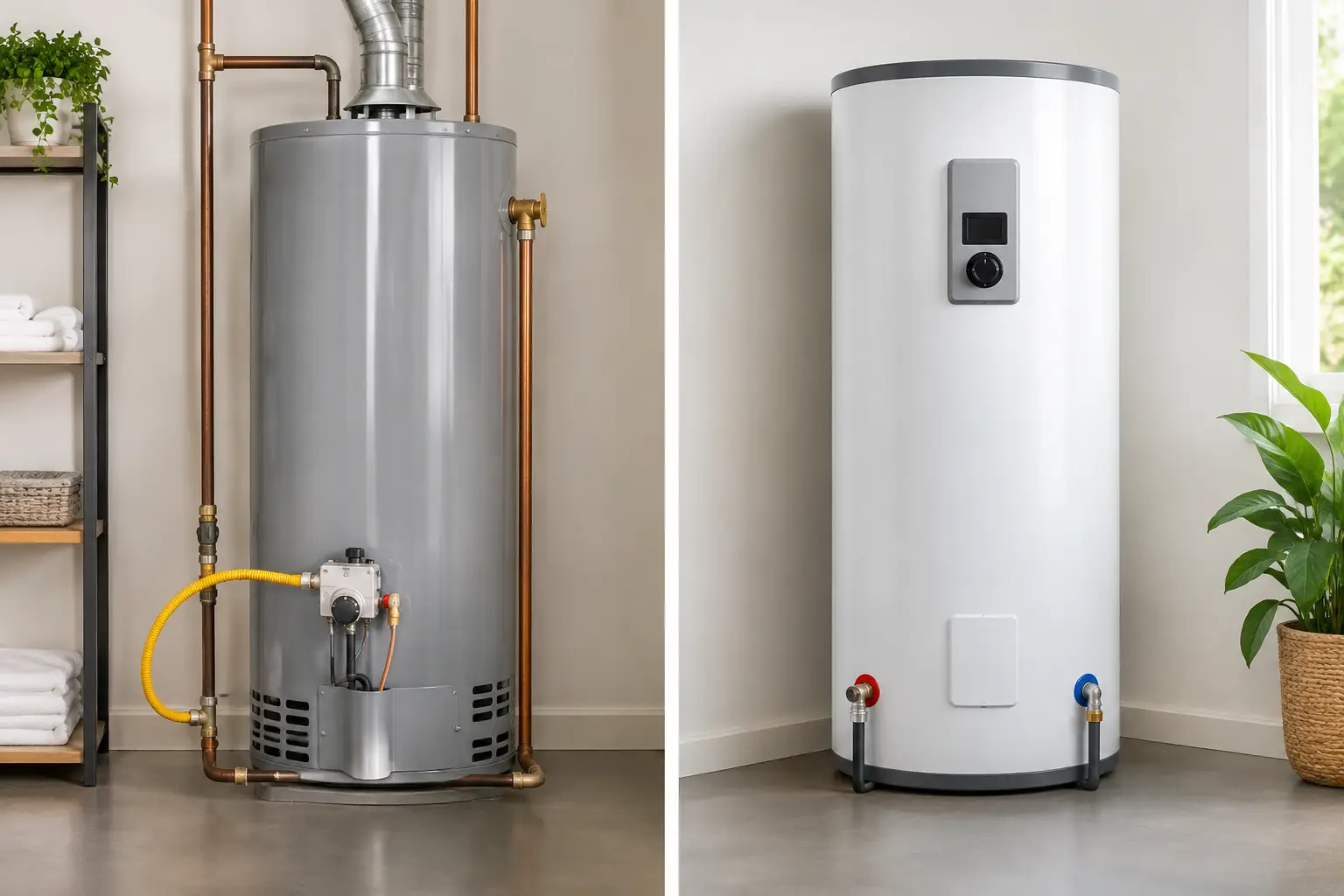
A failed hot-water system has a way of making the decision urgent. Whether the shower has gone cold, the storage tank is leaking or the pilot will not stay lit, choosing between gas versus electric hot water affects more than the replacement price. It changes your household’s recovery time, ongoing energy bills, available hot water at busy times and the work required to install the new system.
For Sydney homeowners, landlords and property managers, there is no one-size-fits-all answer. The right option depends on how many people use the property, whether natural gas is already connected, your electricity plan, roof space for solar and whether the job is a simple replacement or a full system conversion. A licensed plumber can assess the existing services, hot-water demand and installation position before recommending a system that will work properly long term.
Gas versus electric hot water: the practical difference
Gas and electric systems heat water in different ways, which is why they perform differently during peak household use.
A gas system uses natural gas or LPG to heat water. It may be a storage unit with a tank, or a continuous-flow unit that heats water only when a tap is turned on. Electric hot-water systems are commonly storage tanks with heating elements, although heat-pump systems are also electric and use far less power than a conventional element tank.
The first decision is often driven by the services already at the property. Replacing an existing gas system with a new gas unit is usually more straightforward where the gas line, ventilation requirements and suitable location are already in place. The same applies to a like-for-like electric replacement. Changing fuel sources can still be worthwhile, but it needs proper planning rather than an emergency guess.
When gas hot water makes sense
Gas is often a strong choice for larger households that need plenty of hot water across several bathrooms. A correctly sized continuous-flow gas unit can provide hot water on demand, so there is no tank to empty after a run of showers. This suits busy family homes where people shower back-to-back, as well as properties with high-demand appliances.
Continuous-flow systems are compact, usually wall-mounted and can last well when serviced and installed correctly. Because they only heat water while it is being used, they avoid the standing heat loss associated with a storage tank. However, the system must be sized for the number of outlets likely to run at once. A small unit may struggle if two showers, a washing machine and kitchen tap are all in use.
Gas storage systems can also recover faster than standard electric storage tanks. That may suit a household that uses most of its stored hot water during the morning or evening rush.
The trade-off is that gas supply costs vary, and a gas appliance requires a compliant gas connection, safe flue arrangement where applicable and professional gas fitting. In some homes, upgrading the gas line or relocating the unit can add to the installation cost. Gas is not automatically the cheapest option simply because the unit price looks attractive.
When electric hot water makes sense
A conventional electric storage system is often the lower-cost option to purchase and install, particularly as a like-for-like replacement. It is familiar, reliable and can be a practical solution for smaller households, units and investment properties where demand is predictable.
These systems heat a set volume of water and store it for use. The tank size matters. An undersized tank can leave the last person in the household with a cold shower, while an oversized tank may heat more water than the property needs. Electric storage may be connected to a controlled-load or time-of-use electricity plan, depending on the property and retailer. That can reduce running costs, but it also means the system’s reheating schedule needs to match the household’s routine.
The major drawback of a standard electric tank is recovery speed. Once the stored supply is used, it can take several hours to fully reheat. That can be inconvenient in a large household or a share house with high evening demand.
Heat-pump hot-water systems are worth considering when reducing electricity use is the priority. They draw heat from the surrounding air rather than creating all heat through an element, making them far more efficient than conventional electric storage in suitable conditions. They have a higher upfront cost, may produce some fan noise and need an appropriate outdoor location. For homes with solar, a heat pump can be particularly appealing when it is scheduled to heat water during daytime solar production.
Running costs are not just about the fuel type
The ongoing cost of gas versus electric hot water depends on the system, tariff, household behaviour and energy efficiency. Comparing only the purchase price can lead to a decision that costs more over the life of the unit.
Gas continuous-flow systems can be efficient for households that use water at varying times, because they do not keep a full tank hot all day. Yet higher gas supply charges and gas usage rates can narrow the savings. A gas storage system has its own standing losses, so it should be compared against an electric storage system or heat pump on an equal basis.
Conventional electric storage can be economical where controlled-load rates are available, but it can be expensive on peak electricity if the tank heats at the wrong times. A heat pump generally costs less to run than a standard electric tank, especially where solar power is available during the day. Its suitability still depends on space, climate exposure, household demand and the available electrical circuit.
Water use also has a direct impact. Efficient showerheads, prompt repairs to leaking tempering valves and sensible shower lengths reduce hot-water consumption regardless of the fuel source. If bills have suddenly increased, the answer may be a fault or leak rather than the type of system itself.
Size the system for the property, not the old tank
Many replacement decisions go wrong because the new unit is selected based only on what was there before. Household use can change over time. A family may have grown, an extra bathroom may have been added, or a rental property may now have more occupants than when the original system was installed.
For gas continuous flow, the key question is how many fixtures may need hot water simultaneously. System capacity is measured by flow rate, but cold incoming water in winter and the required temperature rise also affect real-world performance. A qualified plumber will consider showers, baths, appliances and likely peak use before selecting the unit.
For storage systems, consider the number of residents, shower habits and the times hot water is most heavily used. Storage capacity, recovery rate and energy source work together. A larger tank is not always better if it creates unnecessary heating costs, but a system that repeatedly runs out will frustrate occupants and may lead to unnecessary call-outs.
Installation requirements can change the best option
A direct replacement is usually faster and less disruptive than switching from gas to electric or electric to gas. Conversion may require new pipework, electrical upgrades, a dedicated circuit, changes to drainage from a relief valve, a compliant base, safe clearances and alterations to the hot-water pipework.
Gas appliances must be installed and tested by a licensed gasfitter. This includes checking gas pressure, pipe sizing, connections and operation. Electric hot-water installation may involve electrical work that must be completed by a licensed electrician. The plumber must also ensure the temperature and pressure relief valve, tempering valve and drainage provisions comply with current requirements.
For strata properties, access, common-property rules, noise considerations and approval processes can affect the available choices. Property managers should also consider serviceability. A unit tucked into a difficult location may be cheaper to install initially but more costly to repair or replace later.
Do not wait on warning signs
No hot water, rusty water, fluctuating temperatures, a leaking tank, discoloured water around the unit or a pilot that repeatedly goes out all warrant prompt fault finding. A leaking storage tank can cause property damage, while gas-related concerns require immediate professional attention. Do not attempt to repair gas connections, safety valves or electrical components yourself.
For an urgent failure or planned upgrade, Tru Blu Plumbing Group can assess the existing system, explain the practical options and install a compliant replacement with clear advice on what the property actually needs. The goal is not to push the most expensive unit. It is to restore reliable hot water with a system sized and installed for the way your household uses it.
If your current unit is nearing the end of its life, arrange an assessment before it fails completely. That gives you time to compare gas, conventional electric and heat-pump options properly, rather than making a rushed decision while the showers are cold.