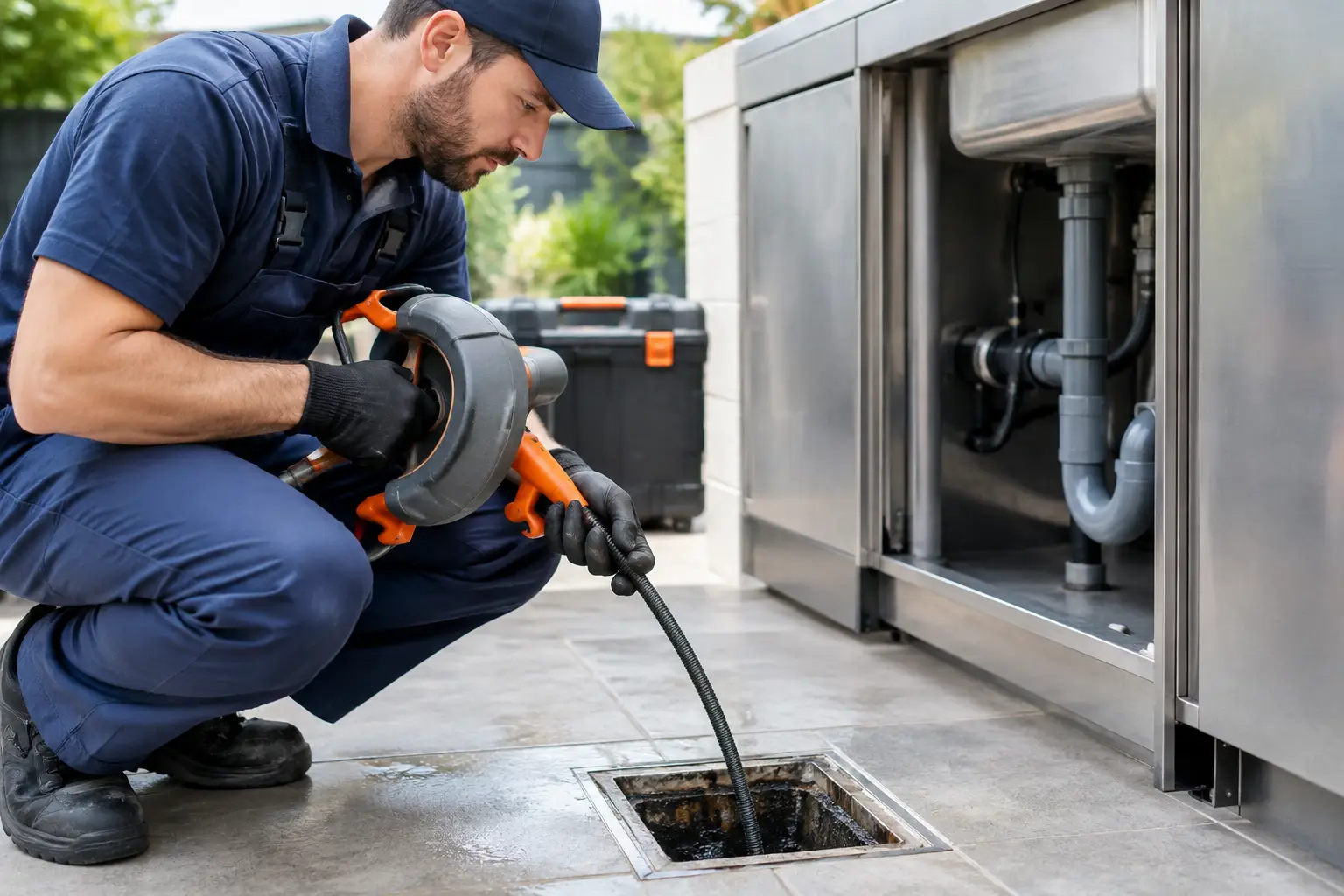
A busy kitchen can send litres of hot, greasy wastewater down the sink every day. Once that wastewater cools inside the pipework, the fat and oil harden onto the pipe walls. Grease traps are designed to stop that buildup before it reaches the sewer, but only when they are correctly sized, regularly cleaned and properly maintained.
For cafés, restaurants, takeaways, clubs, childcare centres and commercial kitchens across Sydney, a neglected grease trap can quickly become a blocked drain, foul odours, slow sinks, wastewater overflows and disruptive downtime. The earlier the warning signs are dealt with, the less likely your business is to face an urgent plumbing call-out during service.
What grease traps do
A grease trap, also called a grease interceptor, is a plumbing device installed between a kitchen’s wastewater outlets and the sewer connection. It separates fats, oils and grease from wastewater before they enter the drainage system.
As warm wastewater enters the unit, it slows down and cools. Food solids settle near the bottom, while oils and fats rise to the surface. The clearer water sits between these layers and exits through the outlet. This simple separation process protects the downstream drains from the sticky residue that causes many commercial kitchen blockages.
Grease traps do not make grease disappear. They hold it temporarily, which means the contents must be removed at regular intervals by an appropriate waste contractor. Waiting until the unit is full or the kitchen sink is backing up is not a maintenance plan. By then, grease may already be moving into the pipework.
Why kitchen grease causes serious drain problems
Grease is often poured into sinks while it is still hot and liquid. It may seem harmless at the time, especially when followed by hot water or detergent. Further along the drainage line, however, the water cools. The grease solidifies and sticks to the inside of pipes, collecting food scraps, coffee grounds and other debris as it builds.
Over time, the pipe diameter narrows. Sinks take longer to drain, floor wastes begin to smell, and wastewater can back up at the worst possible time. In a commercial kitchen, that can affect food preparation areas, staff safety, hygiene standards and your ability to keep trading.
Detergent does not solve the problem. It can break grease into smaller droplets for a short distance, but those droplets still cool, reform and settle further down the system. Chemical drain cleaners are also a poor substitute for proper cleaning. They can be hazardous to staff, damage some pipe materials and rarely remove a significant grease obstruction in a larger commercial drain.
Signs your grease trap needs attention
A grease trap can be overdue for servicing before a complete blockage occurs. Watch for slow-draining pot wash sinks, gurgling sounds, unpleasant smells around floor wastes or the trap itself, and grease or food residue visible in the unit.
Other signs include water pooling around the grease trap, repeated drain blockages in the same kitchen area, or wastewater backing up through a floor waste. These issues may mean the trap is full, the internal components need attention, or grease has passed beyond the trap and into the drain line.
If wastewater is overflowing, keep staff away from the affected area and stop using connected sinks and appliances where practical. Continued water use can worsen the backup and spread contaminated water through the premises. This is the point to arrange urgent plumbing assistance, not to keep flushing the system and hope it clears.
How often should a grease trap be cleaned?
There is no single schedule that suits every kitchen. Cleaning frequency depends on the size of the grease trap, the volume of food prepared, the type of cooking, the number of trading hours and the amount of oil used. A high-volume takeaway kitchen may need much more frequent servicing than a small office kitchenette.
Your trade waste approval, local water authority requirements and grease trap service records may set out the required maintenance schedule for your site. It is worth checking these rather than relying on guesswork. Failing to maintain a grease trap can lead to recurring blockages and may create compliance issues for a business or property owner.
A practical approach is to have the trap inspected and pumped on a planned schedule, then adjust the frequency based on what is actually being removed. If the trap is consistently close to capacity at each visit, service intervals should be shortened. If it is being cleaned far more often than necessary, a plumber can help assess whether the schedule or equipment setup needs adjusting.
Grease trap cleaning versus drain cleaning
These are related services, but they are not the same job. Grease trap cleaning removes the accumulated fats, oils, grease and solids from inside the trap. It keeps the unit able to separate wastewater properly.
Drain cleaning deals with material that has already moved through the trap and lodged in the pipework. A licensed plumber may use high-pressure drain cleaning to scour grease buildup from commercial kitchen drain lines. Where blockages keep returning, a CCTV drain inspection can show exactly where grease, scale, damaged pipework, tree roots or poor pipe falls are contributing to the problem.
This distinction matters. Pumping out a full trap will not necessarily clear a blocked line downstream. Likewise, clearing the line without maintaining the grease trap leaves the original cause in place. The right solution may involve both services, especially after a kitchen has experienced repeated backups.
Common mistakes that shorten the life of a grease trap
The biggest issue is treating the grease trap as a set-and-forget fixture. It needs scheduled servicing, visual checks and sensible kitchen practices to work as intended. Staff training also matters, particularly in kitchens with frequent roster changes.
Avoid putting cooking oil, fats, food scraps, coffee grounds, sauces or solids directly into sinks. Scrape plates and cookware into the rubbish or approved food waste system before washing. Use sink strainers to capture solids, and empty them regularly rather than allowing food scraps to wash into the trap.
Be cautious with hot water flushing and strong chemicals. They may move grease further down the line instead of removing it. If a kitchen has persistent odours or slow drainage despite regular trap pump-outs, there may be a downstream blockage, a damaged drain or an incorrectly configured grease trap that needs professional fault finding.
When to call a licensed plumber
Call a plumber when your commercial kitchen has repeated drain blockages, wastewater backing up, foul odours that return after cleaning, leaking pipework around the grease trap or a suspected problem in the drains beyond the unit. These problems are particularly urgent if wastewater is entering food preparation areas, public spaces or neighbouring tenancies.
A professional inspection can identify whether the issue is limited to the trap or whether grease has caused a larger drainage blockage. CCTV drain inspections provide a clear view inside the pipework, while high-pressure water jetting can remove stubborn grease deposits without unnecessary excavation. If pipe damage or incorrect drainage falls are found, the repair can be planned around your trading requirements where possible.
For landlords, strata managers and property managers, regular grease trap and drain maintenance is also a sensible way to reduce emergency call-outs. It protects the building’s drainage infrastructure and gives tenants a clear process for reporting problems before an overflow occurs.
Protect your kitchen before service stops
A grease trap is only as effective as the maintenance behind it. Keep records, follow the servicing requirements for your premises and act quickly when drainage slows or odours appear. Small warning signs are far easier to manage than an overflowing floor waste during a busy shift.
If your Sydney kitchen is dealing with slow drains, recurring grease blockages or an overflow, Tru Blu Plumbing Group can inspect the system, carry out high-pressure drain cleaning and provide clear advice on the next repair or maintenance step. Don’t leave it until the damage gets worse - book a licensed technician before a manageable issue shuts down your kitchen.