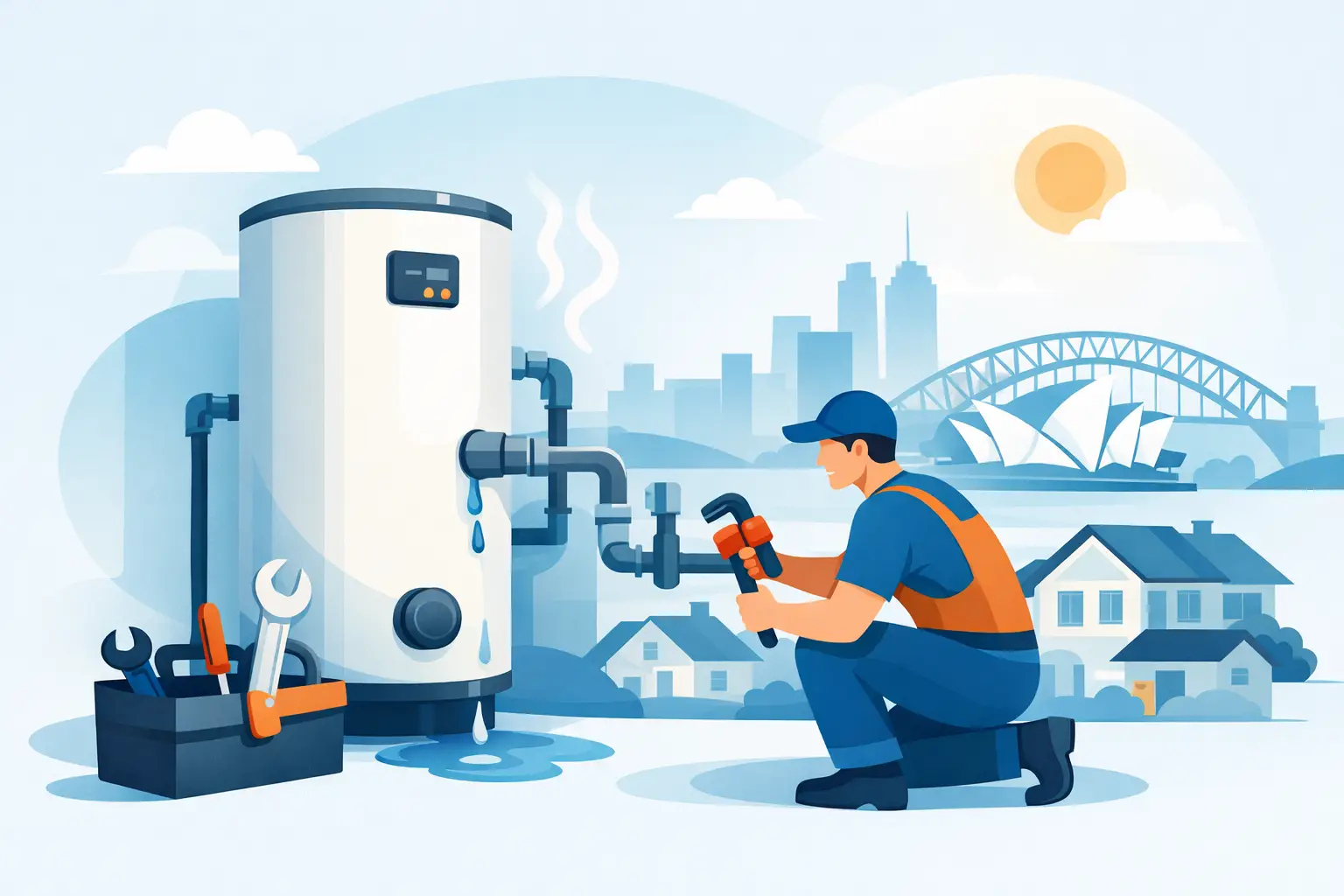
A cold shower is usually the first sign, but a failing hot-water system can give you much bigger warnings: rusty water, a leaking tank, strange noises or a pilot light that will not stay on. Hot water repairs should not be put off when there is water escaping, gas involved or no reliable hot water for the household. A small fault can quickly become water damage, a higher power bill or a complete system failure at the worst possible time.
For Sydney homeowners, tenants, landlords and businesses, the right response is simple: make the area safe, avoid guessing at the cause, and arrange a licensed plumber to inspect the system. The repair needed depends on the unit type, its age, the fault and whether repair will give you reliable service or simply postpone replacement.
When hot water repairs are urgent
A hot-water problem is urgent when it creates a safety risk, active leak or loss of an essential service. If water is pooling around the base of a storage tank, turn off the water supply to the unit if you can safely identify the isolation valve. For an electric system, switch off the dedicated circuit at the switchboard only if the area is dry and safe to access. Do not touch wet electrical equipment.
If you smell gas around a gas hot-water system, do not attempt to relight the pilot or investigate with a flame. Turn off the gas supply if it is safe to do so, keep people clear of the area and call for urgent help. A gas smell, hissing sound or damaged gas line is not a DIY job.
Discoloured water can also need quick attention. Brown or rusty hot water may point to internal tank corrosion, sediment or deteriorating components. If the water is excessively hot, fluctuates sharply or comes out with low pressure, the system needs fault finding before it becomes unsafe or stops altogether.
Common hot-water faults and what they can mean
Not every cold shower means the whole system is finished. A qualified plumber can test the system and isolate the actual fault rather than replacing parts based on guesswork.
For electric storage units, common issues include a failed heating element, faulty thermostat, tripped circuit, worn tempering valve or a leak from the tank itself. An element or thermostat repair can often restore an otherwise sound unit. A corroded or split tank is different - the tank cannot generally be repaired reliably and replacement is usually the practical option.
Gas storage and continuous-flow systems can fail because of ignition problems, a faulty thermocouple, burner issue, gas regulator fault, blocked filters or inadequate water flow. Continuous-flow units are compact and efficient, but they rely on correct gas supply, water pressure and electronic controls. Error codes are helpful clues, not a diagnosis. Record the code if one appears, then have the unit assessed by a licensed professional.
Heat-pump hot-water systems have their own set of moving parts, including fans, compressors and controls. They can be highly efficient, but their repair needs are more specialised. Noise, poor recovery times or a system that is not heating properly should be checked before energy use rises or the unit fails completely.
What to do before the plumber arrives
There are a few sensible steps that protect your property without creating further risk. First, stop using the hot water if there is a visible leak, burning smell, electrical concern or suspected gas issue. Move boxes, furniture and valuables away from escaping water, but do not remove covers or dismantle the unit.
Take a clear photo of the system and any leak, corrosion or error code if it is safe. It can help the plumber arrive prepared with likely parts and identify whether a replacement unit may be needed. If water is spreading through a cupboard, ceiling or wall, contain it with towels or a bucket while waiting for assistance.
Avoid turning valves repeatedly, forcing controls or adjusting the temperature beyond normal settings. Hot-water systems are connected to pressurised water, electricity or gas. A quick online fix can turn a repairable fault into a dangerous one.
Repair or replacement: making the right call
The best choice is not always the cheapest call-out on the day. A minor component repair is sensible when the system is in good condition, has useful life left and can be returned to safe, dependable operation. This is often the case with a newer unit affected by a thermostat, valve, ignition or element fault.
Replacement becomes more sensible where the storage tank is leaking or corroded, repairs are becoming frequent, parts are no longer readily available, or the unit is old and inefficient. A tank leak usually indicates internal failure, and patching it is rarely a long-term answer.
The decision also depends on household demand. A growing family may outgrow a small storage unit even if it can be repaired. A continuous-flow system can provide hot water on demand when correctly sized, while a larger storage system may suit households with predictable peak use. Heat pumps can reduce running costs for some properties, but installation location, available space and upfront cost need to be considered.
A good plumber will explain the trade-off in plain English: what the repair costs, how likely it is to last, what replacement options fit your home, and whether any upgrades to valves, pipework or electrical or gas connections are required. Upfront pricing matters because it lets you make the decision before work starts.
Why hot-water systems leak
A dripping pipe connection may be a straightforward repair. Water from the temperature and pressure relief valve can also occur when the system is releasing pressure, although constant discharge needs inspection. Water from underneath a tank, however, is more concerning and may signal that the cylinder has corroded through.
Sydney water conditions, system age and lack of maintenance can all contribute to wear. Sediment can build up in storage tanks, reducing efficiency and causing rumbling or popping noises as the unit heats. Valves, fittings and flexible connectors also deteriorate over time.
Do not ignore a slow leak because it seems manageable. Even a small amount of water can damage cabinetry, flooring, plaster and insulation. If the unit is installed in a ceiling space, cupboard or raised platform, the risk of hidden damage is even greater.
Hot-water repairs for rentals and strata properties
Tenants should report loss of hot water, leaks or suspected gas faults to the landlord, property manager or authorised maintenance contact straight away. Keep a record of when the issue began and provide photos where possible. In many cases, hot water is an urgent repair issue, particularly where the system has failed completely or is leaking.
Landlords and property managers should act quickly to reduce tenant disruption and prevent a minor fault becoming property damage. A clear diagnosis helps decide whether an approved repair will solve the issue or whether replacement is the better investment. For strata properties, access to common areas, meter locations and building rules may affect the work, so early communication avoids delays.
Choose licensed hot-water technicians
Hot-water repairs involve more than restoring warm water at the tap. The work may involve water pressure, tempering requirements, electrical isolation, gas connections, flueing and safe disposal of an old unit. It needs the right licence, correct testing and workmanship that protects your home after the technician leaves.
Tru Blu Plumbing provides Sydney homeowners and property managers with fast, practical hot-water fault finding, repair and replacement support. The team is fully licensed and insured, with licence number 500177C, and can assess urgent leaks, failed systems and gas hot-water concerns with clear advice and upfront pricing.
If your hot water has stopped, the tank is leaking or the system is making noises it never used to make, do not wait for the next cold shower or a bigger water bill. Isolate the problem safely where possible, book a qualified plumber, and get the system checked before a manageable repair turns into a flooded room or a full system breakdown.