A shower that fills around your ankles is more than an annoying start to the day. Standing water can escape the shower area, damage flooring and encourage mould. Knowing how to unblock shower drain problems early can often restore normal flow, but only if the blockage is close to the surface and you use the right method.
Most slow shower drains are caused by a mix of hair, soap residue, body oils and product build-up caught in or near the waste. If water is backing up quickly, smells like sewage, or other fixtures are draining poorly too, the problem may be further down the drainage line. That is the point to stop DIY attempts and arrange a licensed plumber.
Start by working out how serious the blockage is
A slow drain that has gradually worsened over weeks is usually a local blockage around the shower grate or trap. Water that suddenly stops draining altogether may be caused by a compacted mass of hair and soap, but it can also point to a more substantial obstruction.
Check what happens when you run the bathroom basin or flush the toilet. If the shower drain bubbles, rises or gives off a foul sewer smell, the issue may be affecting a shared branch drain or the sewer line. This is especially relevant in older Sydney homes, units and strata properties where pipework can be shared or difficult to access.
Do not keep running water to test a drain that is already overflowing. A small blockage can quickly become a wet-floor problem, particularly if the shower screen or floor waste cannot contain the water.
What you will need before you begin
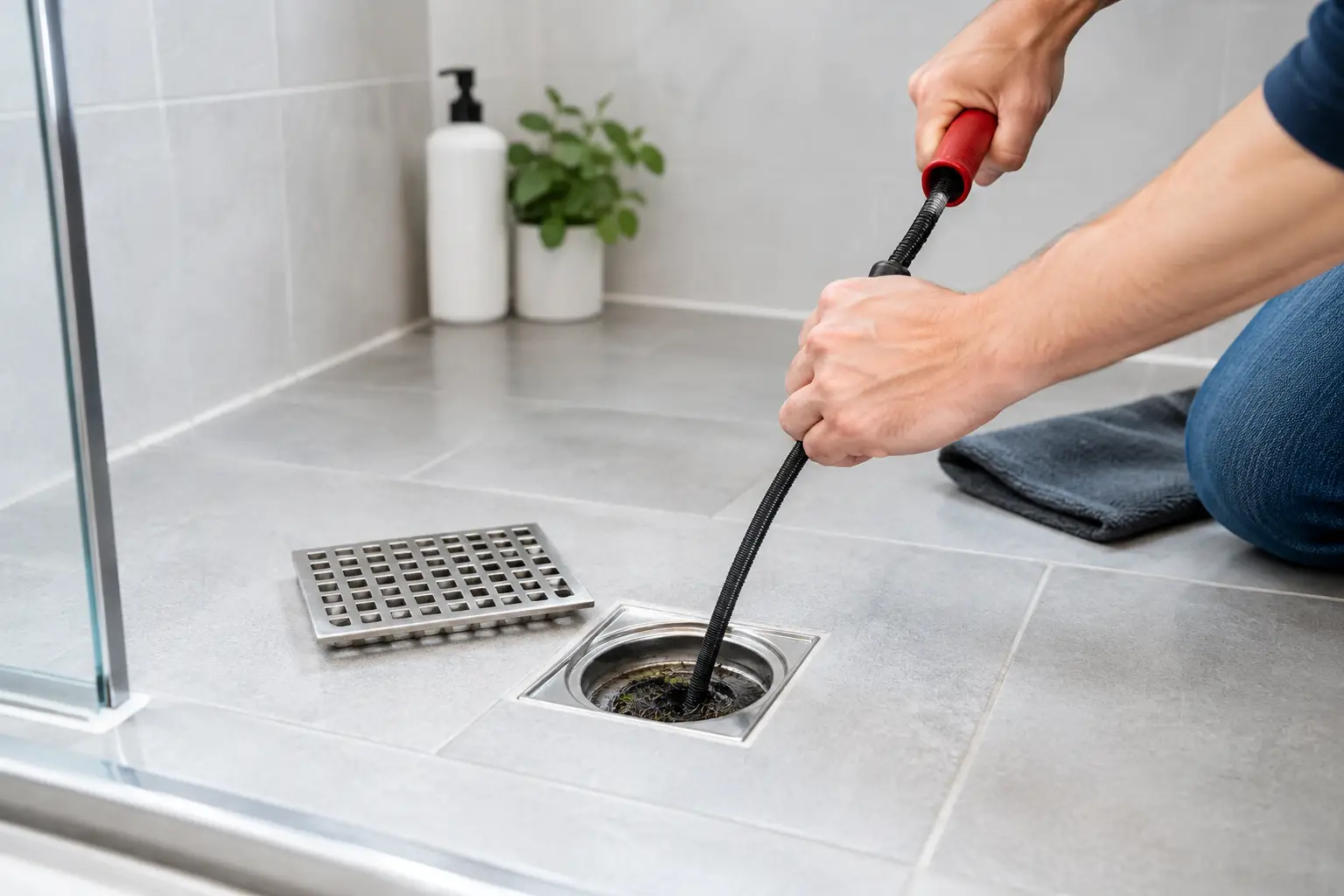
For a straightforward shower blockage, gather rubber gloves, a bucket or old container, a flat screwdriver if the grate needs lifting, and a plunger. A small hand-held drain snake can also help where hair is lodged just below the waste opening.
Avoid mixing cleaning products. Chemical drain cleaners can create dangerous fumes, damage some pipe materials and leave caustic liquid sitting in the line for the next person to handle. They also rarely remove the main cause of a shower blockage: a physical plug of hair and hardened soap.
Remove the drain cover and visible debris
Put on gloves and remove the shower grate. Some grates lift out, while others are held in place with a screw. Place screws somewhere safe so they do not disappear down the drain.
Use a torch to look into the opening. You may see hair, soap sludge or a foreign object caught near the top. Pull out anything you can safely reach using gloved fingers, tweezers or a plastic drain-cleaning tool. Do not force rigid wire down the pipe, as it can scratch fittings, push the blockage deeper or become stuck itself.
Dispose of debris in the rubbish, not the toilet or basin. Once the opening is clear, run a small amount of hot tap water to see whether drainage improves. Do not use boiling water, particularly where plastic pipework or seals may be present.
Use a plunger correctly
A cup plunger can loosen a soft blockage in the shower waste. Add enough water to cover the rubber edge of the plunger, then position it squarely over the drain. If the shower has an overflow opening, cover it with a damp cloth to improve suction.
Pump steadily 10 to 15 times, keeping the seal tight. Lift the plunger and wait a moment before checking whether the water drains away. Repeat once or twice if needed. Aggressive plunging is not better - too much force can splash dirty water around the bathroom and may disturb older fittings.
If water begins draining freely, flush the line with warm water for a few minutes. This helps move loosened residue through the pipe rather than allowing it to settle again nearby.
Try a hand-held drain snake for hair blockages
If the plunger does not shift the problem, gently feed a flexible hand-held drain snake into the waste opening. Turn it slowly as you lower it. When you feel resistance, do not force it. Rotate and withdraw the tool to bring the hair and debris back out.
This method works best for shallow blockages. It is less effective against mineral scale, grease build-up further along the pipe, collapsed pipework or tree roots in an external drain. If the snake will not pass easily or comes back clean while the shower remains blocked, stop there. Repeated forcing can make a simple repair more complicated.
Can bicarbonate soda and vinegar unblock a shower drain?
Bicarbonate soda and vinegar can help freshen a drain and loosen light soap residue after you have removed visible hair. They are not a reliable fix for a fully blocked shower drain, and they will not remove a dense clump lodged in the trap or a blockage further down the line.
If you choose to try this method, use it only when there are no chemical cleaners already in the drain. Add bicarbonate soda followed by vinegar, allow the fizzing to settle, then rinse with warm water. Treat it as a maintenance step, not a substitute for proper drain clearing.
Commercial chemical products are a poor first choice. Apart from safety concerns, they can fail to penetrate hair blockages and may make professional work more hazardous if the product remains in the pipes. Always tell a plumber if chemicals have been used.
When a blocked shower drain needs a plumber
Call a plumber promptly if water is not moving at all, keeps returning after you clear the grate, or backs up when another fixture is used. Gurgling sounds, sewer odours, discoloured water and damp patches near the bathroom are also warning signs that the issue is beyond the shower waste.
For landlords, property managers and strata managers, recurring drainage complaints should be investigated rather than handled with repeated store-bought treatments. The source may be a shared line, an incorrect pipe fall, damaged drainage, roots, scale or a hidden obstruction. Delaying the diagnosis can lead to water damage, tenant disruption and larger repair costs.
A licensed drainage plumber can use CCTV drain inspections to see inside the pipework and locate the exact cause without unnecessary digging. High-pressure drain cleaning can then clear stubborn build-up, while specialist fault finding identifies cracked, displaced or root-affected pipes that need repair.
In Western Sydney, South-West Sydney, the Hills District and North-West Sydney, changing soil conditions, mature trees and ageing drainage systems can all contribute to deeper drain problems. A shower blockage is sometimes the first noticeable sign.
How to prevent the shower drain blocking again
The simplest prevention is to catch hair before it enters the waste. Fit a removable hair catcher that suits your shower grate and empty it regularly. Clean the grate and visible waste opening every few weeks, particularly in households with long hair or where heavy hair products are used.
Avoid washing excess shaving foam, thick body scrubs or plaster-like renovation residue into the shower. These materials can combine with hair and soap to form a stubborn blockage. If you are renovating, protect bathroom drains from grout, paint and construction debris from the outset.
A drain that has already blocked several times is not normal. It may need professional cleaning before the build-up becomes a complete obstruction. Tru Blu Plumbing Group can assess the line, explain the cause clearly and use the appropriate equipment to clear it properly.
If your shower is holding water now, keep the water use to a minimum and act before it reaches the bathroom floor. A quick surface clean may be all it needs, but persistent symptoms deserve a proper diagnosis rather than another temporary fix.