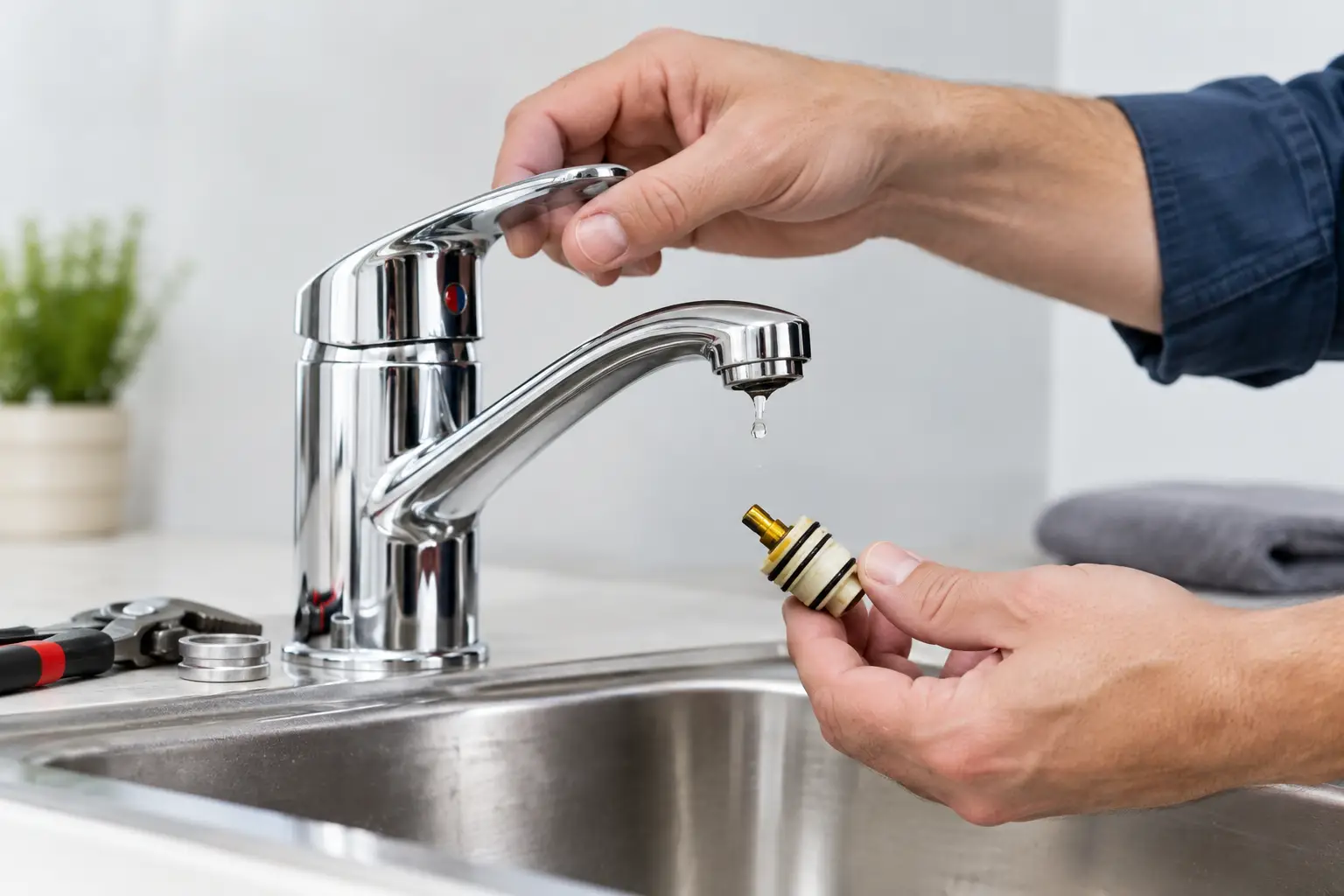
A tap drip is more than an annoying sound
That steady plink into the sink can waste far more water than most people realise. More importantly, a leaking tap can signal a worn internal part, excessive water pressure, corrosion or a problem with the tap body itself. Timely leaking tap repair protects your water bill, prevents staining around basins and stops a small fault becoming a bigger plumbing job.
For Sydney homeowners, landlords and property managers, the right response depends on where the water is coming from. A drip from the spout is different from water escaping around the handle or pooling beneath the vanity. Identifying the source first helps determine whether a simple repair is sensible or whether it is time to book a licensed plumber.
Why taps start leaking
Most tap leaks come down to wear and movement. Every time a tap is opened or closed, its internal components are pressed, turned or sealed against water pressure. Over years of daily use, those parts eventually deteriorate.
Traditional separate hot and cold taps commonly leak because the rubber washer has hardened, split or become misshapen. The washer can no longer seal properly against the valve seat, allowing water to pass through the spout even when the handle is tightly closed. A damaged valve seat can produce the same result, so replacing the washer alone does not always solve the problem.
Mixer taps work differently. They use a ceramic cartridge that controls water flow and temperature. Sediment, mineral build-up or a worn cartridge can cause dripping, a stiff handle or water leaking from the base of the mixer. Older tapware may also develop corrosion inside the body, particularly where fittings have been exposed to moisture for a long period.
A leak around the handle usually points to a worn O-ring, spindle seal or cartridge seal. Water under the sink can be more concerning. It may come from a loose flexi hose, failing isolation valve, cracked pipe or a leak from the tap connection rather than the tap itself. Do not assume it is only a washer if water is escaping inside a cupboard.
Check the leak before attempting a repair
Start by drying the tap, sink and area underneath it. Turn the tap off normally, then watch closely for a few minutes. If water continues from the spout, the internal sealing components are the likely issue. If water appears at the handle, base or beneath the bench when the tap is running, the fault may involve seals, connections or the tap body.
Also check whether the handle needs excessive force to turn off. Forcing a stiff tap can damage the spindle, crack ceramic components or worsen a worn seat. If you can only stop the drip by overtightening the handle, a repair is already overdue.
Before removing any part of a tap, locate the isolation valves under the basin or sink. Turn off both hot and cold supplies and open the tap to release pressure. If there are no working isolation valves, the water may need to be isolated at the meter or main stop valve. This is one point where professional help is often the safer option, especially in apartments, strata properties or older homes with ageing pipework.
When a DIY washer replacement can work
A straightforward washer replacement may be reasonable when you have an older compression-style tap, the leak is only from the spout, and the isolation valves are accessible and working. You will need the correct washer size, basic hand tools and care when dismantling the tap.
After isolating the water, remove the handle and cover plate to access the spindle. The spindle can then be removed so the washer at its base can be inspected and replaced. Take the old washer to a plumbing supplier if you are unsure of the size. A washer that is close but not correct may still leak.
The trade-off is that a new washer only addresses one possible cause. If the valve seat is pitted or rough, the replacement may not seal. If the spindle threads are worn, the tap may remain difficult to operate. It is also easy to scratch tapware finishes, cross-thread a component or create a new leak when reassembling the unit.
For rental properties, commercial premises and strata sites, arranging a professional repair also creates a clear maintenance record. That can be useful where water damage, tenant reports or recurring plumbing faults need to be documented.
Leaking tap repair for mixer taps and modern tapware
Mixer taps are compact, but they are not necessarily simpler to repair. The correct cartridge must match the tap make and model, including its diameter, height, locating pins and spline pattern. Installing the wrong cartridge can prevent the handle from fitting properly or leave the tap leaking.
A licensed plumber can strip down the mixer, inspect the cartridge and seals, clean internal seating surfaces and test the unit under pressure. If replacement parts are unavailable or the body is corroded, replacing the tap may be better value than repeated repairs.
This is particularly relevant for kitchen mixers. A leaking kitchen tap can affect the cabinet below, where moisture may swell particleboard, damage stored items and encourage mould. Water can travel along pipework before becoming visible, so a damp cupboard should be checked promptly rather than left to dry out on its own.
Do not ignore leaks under the sink or basin
A drip from the spout wastes water. A leak beneath the fixture can damage a property. Water escaping from flexible hoses, isolation valves or pipe connections may be slow at first, then worsen without warning as a fitting fails.
Turn off the local isolation valves immediately if water is pooling under a sink. If the valves are leaking, jammed or cannot be accessed, shut off the main water supply where safe to do so and arrange urgent plumbing assistance. Place a container or towel beneath the leak to limit damage, but do not use tape, sealant or makeshift clamps as a permanent fix.
In multi-storey homes and units, even a small ongoing leak can affect cabinetry, flooring and rooms below. Landlords and property managers should treat reports of damp cupboards, mouldy smells or unexplained water marks as a maintenance priority.
What a professional plumber checks
A proper leaking tap repair is not just about stopping the visible drip. The plumber should confirm the source of the leak, isolate the supply safely and inspect the condition of the working components. Depending on the tap type, this can include the washer, jumper valve, spindle, valve seat, O-rings, ceramic cartridge, aerator, flexi hoses and isolation valves.
Water pressure may also need attention. Excessively high pressure can place added stress on tap seals, hoses and appliances throughout the property. If several taps are leaking, banging pipes are occurring or hot-water relief valves are discharging regularly, the issue may be broader than one fixture.
A licensed plumber can recommend whether repairing the existing tap is worthwhile or whether replacement is the more reliable long-term option. The answer depends on the age of the tapware, the availability of parts, the condition of internal surfaces and the cost of labour compared with a new fitting.
Prevent future tap leaks
Taps will eventually wear, but routine attention can extend their working life. Avoid wrenching handles tightly shut, as this compresses washers and strains moving parts. Clean aerators when water flow becomes uneven, and act early if a handle becomes stiff, loose or noisy.
It is also worth checking under sinks during regular cleaning. Look for dampness around hoses and valves, rust on fittings, swollen cabinet surfaces and musty odours. These small checks are especially useful before holidays, after tenants move out or during planned property inspections.
If you are replacing tapware, choose quality fittings with serviceable cartridges and readily available spare parts. A cheaper tap can cost more over time if replacement cartridges cannot be sourced or if internal components fail early.
Get the drip fixed before it becomes damage
A leaking tap rarely fixes itself, and the longer it is left, the greater the chance of wasted water, damaged finishes or a hidden leak spreading inside cabinetry. If a washer change has not stopped the problem, the tap is leaking from its base, or water is appearing under the sink, book a licensed plumber rather than risking further damage.
Tru Blu Plumbing Group provides prompt, transparent leaking tap repairs across Western Sydney, South-West Sydney, the Hills District and North-West Sydney. A qualified technician can identify the fault, explain the repair options clearly and get your tap operating properly again before a small drip turns into a costly problem.