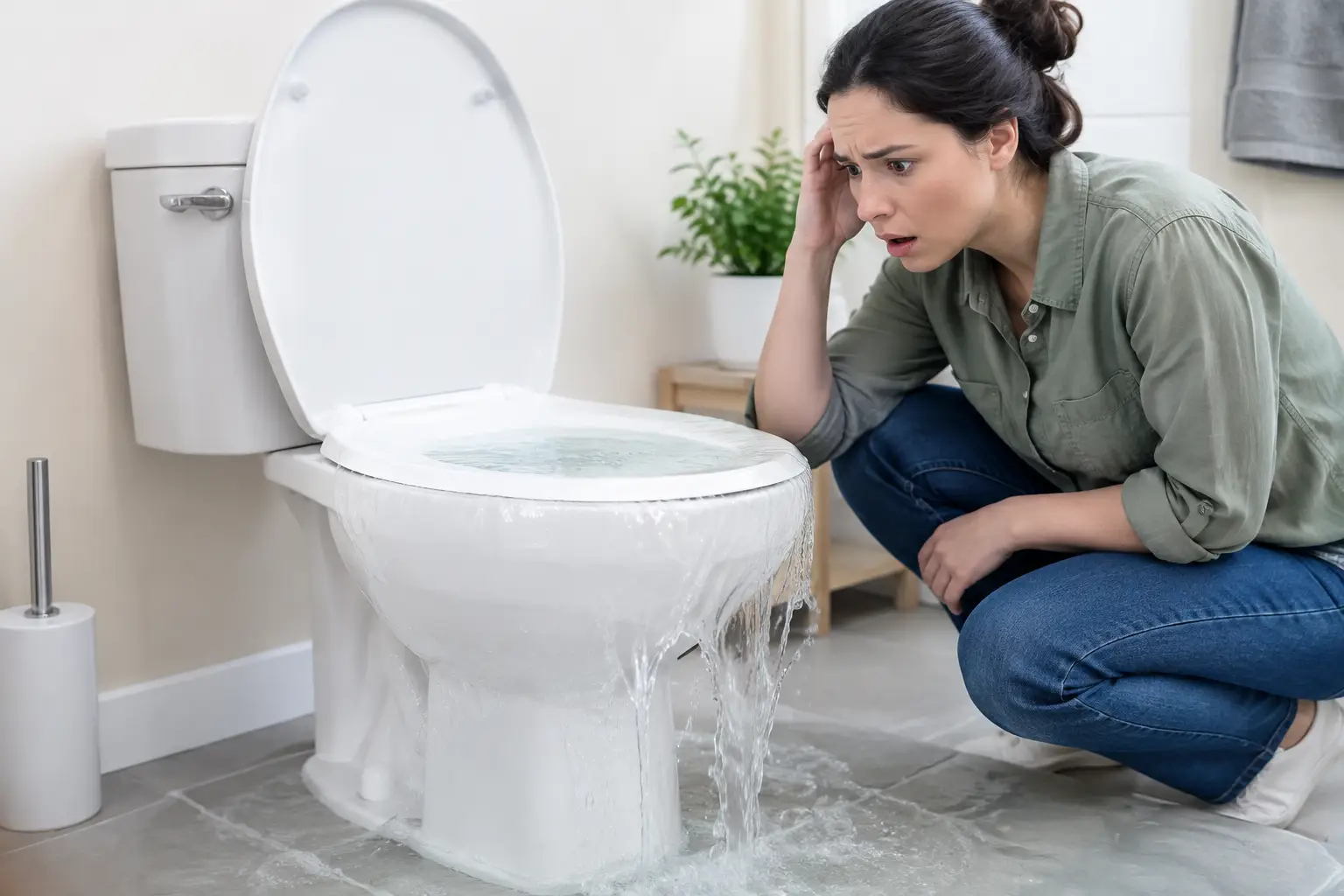
A toilet that keeps rising after you flush can turn from an inconvenience into a water-damage emergency in seconds. An overflowing toilet after flushing usually points to a blockage in the toilet trap, drain line or sewer, and continuing to flush will only force more contaminated water onto the floor. Act quickly, keep people away from the area and arrange professional help if the water will not stop or the problem keeps returning.
What to do when your toilet starts overflowing
Your first job is to stop more water entering the bowl. Remove the cistern lid and push the rubber flapper valve closed at the bottom of the tank if it is still releasing water. Then turn the isolation valve clockwise. It is usually located on the wall or floor behind the toilet, connected to the water supply hose.
If water is close to the rim, do not flush again to “clear it”. Use old towels around the base of the toilet to limit spread, but avoid direct contact with wastewater. Keep children, pets and anyone not wearing protective footwear out of the bathroom.
Once the water has settled, you can cautiously try a toilet plunger if you suspect a simple blockage. Use a flange-style toilet plunger that seals over the outlet, rather than a small flat sink plunger. Make slow, firm plunges for 15 to 20 seconds, then wait and see whether the water drains away. If the bowl remains full, rises again or drains very slowly, stop there and call a licensed plumber.
Do not pour caustic drain chemicals into the toilet. They often fail to reach the blockage, can damage pipework and seals, and create a hazard for the person who later needs to work on the drain.
Why an overflowing toilet after flushing happens
The cause may be close to the toilet, or it may be further down the sewer line. The difference matters because a local blockage can sometimes be cleared quickly, while a sewer fault needs the right diagnostic equipment and a lasting repair.
A blockage in the toilet trap
Toilets have an internal curved section called a trap. It holds water to prevent sewer odours entering the home, but it can catch too much toilet paper, sanitary products, wet wipes, toys or other foreign objects. Despite what packaging may say, wipes should not be flushed. They do not break down like toilet paper and commonly bind together in drains.
A trap blockage often affects one toilet only. You may notice the water level rising immediately after flushing, followed by slow draining or no draining at all.
A blocked branch drain or sewer line
When the blockage sits beyond the toilet, other fixtures may give you warning signs. The shower, bath or floor waste might gurgle when the toilet is flushed. Water may back up through a lower floor drain, or more than one toilet may drain slowly.
In Sydney homes, tree roots are a frequent cause of recurring sewer blockages. Roots can enter older joints, cracks and damaged sections of pipe in search of moisture. Grease, paper, wipes and debris then collect around the roots until wastewater cannot pass freely. A collapsed pipe, displaced joint or poor pipe grade can cause similar repeat problems.
A cistern fault that will not stop filling
Not every overflow is caused by a blocked drain. If clean water is spilling from the cistern or running continuously into the bowl before you flush, the inlet valve or flush valve may be faulty. Turning off the isolation valve will still protect the property, but the repair is different from clearing a blocked sewer.
A plumber will check whether the water is rising because it cannot leave the bowl, or because the cistern is continuing to send water into it. That fault finding avoids treating the wrong problem.
When a plunger is not enough
A plunger is reasonable for a one-off, minor obstruction, but it is not a solution for every overflow. Call a plumber straight away if wastewater has reached the floor, the toilet is the lowest fixture in the property, multiple drains are affected, sewage odours are present or the issue has returned after plunging.
Landlords, property managers and strata managers should treat a wastewater overflow as urgent. Apart from disruption to tenants or residents, sewage exposure can affect flooring, skirting boards, cabinetry and common areas. Prompt documentation and a professional assessment are particularly useful where responsibility for a shared drainage line needs to be established.
For commercial premises, close off the affected bathroom until it has been cleaned and made safe. A blocked toilet in a café, office, shop or warehouse can quickly become a hygiene and business-continuity issue.
How a licensed plumber finds the real cause
The right repair starts with locating the blockage rather than guessing. For a straightforward toilet obstruction, a plumber may use professional clearing equipment or remove the toilet if an item is lodged in the trap.
Where the problem appears to be in the drain, high-pressure drain cleaning can cut through built-up waste, grease and intrusive roots. Unlike a basic cable that may punch a temporary hole through a blockage, high-pressure water jetting cleans a wider section of the pipe. It is often the better option for recurring blockages, although the pipe condition must be considered before jetting begins.
A CCTV drain inspection is the clearest way to see what is happening underground. A camera can identify root intrusion, cracked pipework, silt, a collapsed section, poor connections or a foreign object. This is especially valuable when a toilet overflows repeatedly, when an older property has an unknown drainage layout, or before recommending sewer repairs or replacement.
If the camera identifies damage, the plumber can explain whether the line can be repaired locally or whether a section needs replacement. The most economical option depends on pipe access, the extent of deterioration and whether roots will continue entering the system. Clearing roots without addressing a damaged pipe may restore flow now, but it may not prevent the next blockage.
Clean-up and safety after a wastewater overflow
Water from an overflowing toilet should be treated as contaminated, particularly if it has backed up from the sewer. Wear gloves and enclosed footwear before handling wet items. Porous materials such as rugs, cardboard, untreated timber and some underlay may need specialist cleaning or disposal if they have absorbed wastewater.
After the plumbing issue is controlled, clean hard surfaces with an appropriate disinfectant, following the product directions. Wash hands thoroughly and ventilate the room. If wastewater has travelled beneath flooring, into wall cavities or through a ceiling, do not assume surface cleaning is enough. Let the plumber know how far the overflow spread so they can advise on the next steps.
Preventing another toilet overflow
The simplest prevention is being selective about what goes down the toilet. Human waste and toilet paper are the only things that belong there. Put wipes, tissues, cotton buds, dental floss, sanitary products and nappies in the rubbish, even when a product is labelled flushable.
If your property has mature trees, older clay pipes or a history of blocked drains, planned maintenance can prevent an after-hours emergency. A periodic CCTV drain inspection and high-pressure clean can reveal root growth and pipe deterioration before the toilet starts backing up. The right interval depends on the age of the system, nearby vegetation and previous drainage issues.
For homes and properties across Western Sydney, South-West Sydney, the Hills District and North-West Sydney, Tru Blu Plumbing Group can respond to urgent toilet and sewer problems with licensed fault finding, CCTV drain inspections and professional drain clearing. Clear communication about the cause and repair options helps you make the right call before damage gets worse.
An overflowing toilet is not the time to keep testing the flush. Stop the water, avoid chemicals and arrange a professional inspection when the drain does not clear immediately or any wastewater has escaped the bowl.