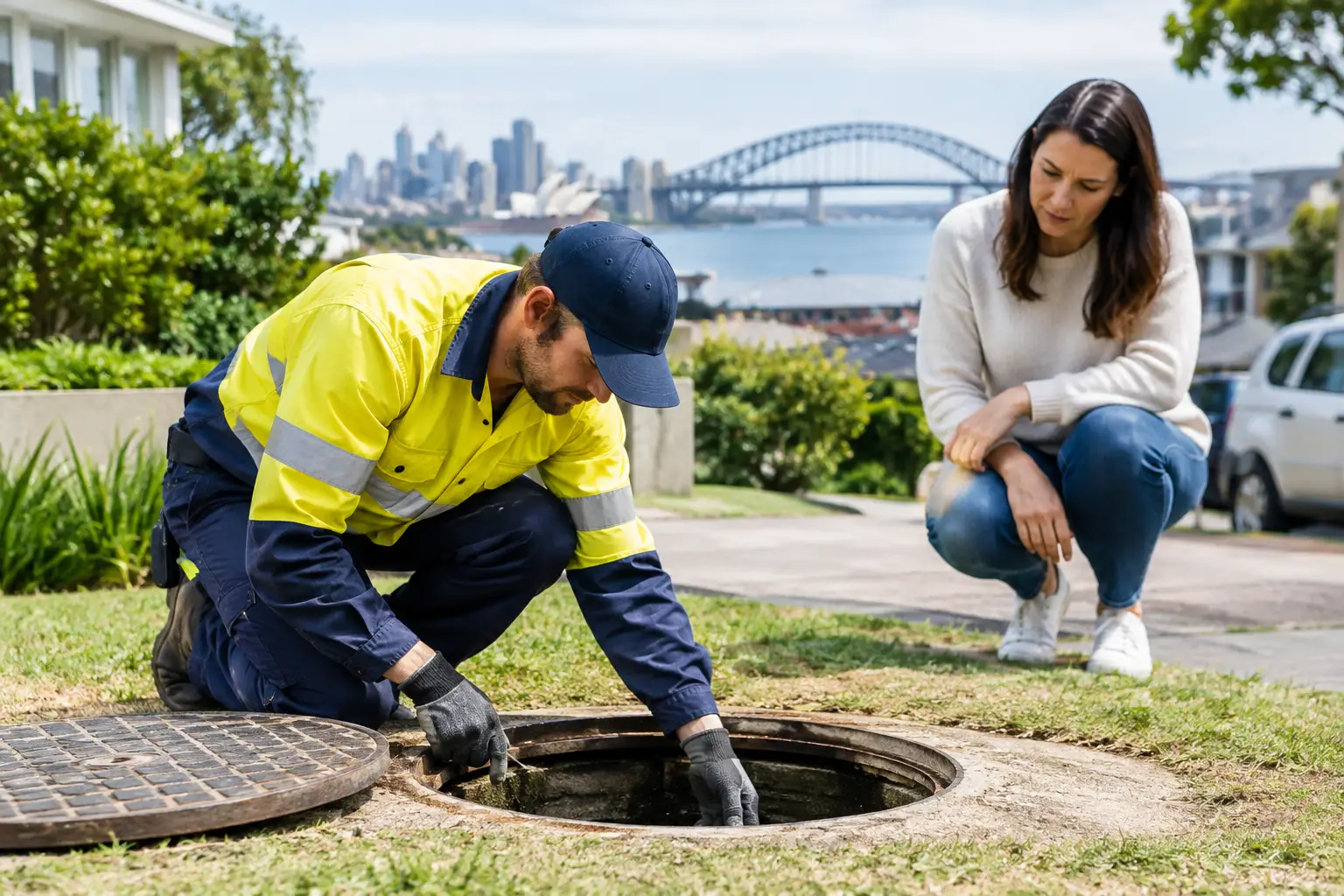
A toilet that will not flush, sewage rising through a floor drain or a foul smell in the yard can turn into a serious property problem fast. Sewer repair responsibility is usually the first question owners, landlords and strata managers ask, but the answer depends on exactly where the fault sits and what type of property is involved.
In many Sydney properties, the owner is responsible for the private sewer pipework within the boundary, while the water authority is responsible for the public sewer main. The difficult part is that the blockage, crack or collapse may be hidden underground. A professional inspection is the quickest way to establish the cause, locate the fault and give you clear evidence before repair decisions are made.
Where sewer repair responsibility usually changes
Your private sewer line carries wastewater from toilets, showers, basins, kitchens and floor wastes towards the public sewer network. As a general rule, the property owner is responsible for the pipes servicing their property up to the connection point with the authority's sewer infrastructure.
The public sewer main, which may run in the street, footpath, rear lane or sometimes through an easement, is generally maintained by the relevant water authority. However, pipe layouts vary considerably across older Sydney suburbs, unit complexes and newer developments. The physical location of a pipe is not always enough to confirm ownership.
A sewer pipe can run through a neighbour's land, cross a shared driveway or sit beneath common property. There may also be inspection shafts, boundary traps and junctions that complicate the question. Do not assume that a problem close to the street is automatically the authority's responsibility, or that a problem in the yard is definitely yours.
For a clear answer, a licensed plumber can inspect the line with a CCTV drain camera, identify the direction of flow and pinpoint the damaged section. If the fault appears to be on the public side, the inspection findings can help you report the issue to the correct authority. If it is on private pipework, you can move straight to a repair plan rather than losing time guessing.
What property owners are commonly responsible for
Homeowners are commonly responsible for blockages, breaks and deterioration in their private drain and sewer pipes. This can include the line from the home to the boundary connection, branch lines serving bathrooms or kitchens, and pipes beneath gardens, driveways or concrete slabs.
Common private sewer faults include tree root intrusion, cracked or displaced clay pipes, collapsed sections, heavy grease build-up, foreign objects lodged in the line and damage caused by ground movement. Older homes can be particularly vulnerable where original earthenware pipes have shifted over decades or roots have entered through small joints.
Responsibility can also extend to preventing repeat damage. If a CCTV drain inspection shows substantial root entry or a pipe that has failed structurally, clearing the blockage alone may only be a short-term fix. High-pressure water jetting can restore flow, but a damaged pipe may require excavation, sectional repair or replacement to prevent another overflow.
This is where transparent advice matters. A good plumber should explain whether the line can be cleaned and monitored, repaired locally, relined where suitable, or needs replacement. The right option depends on the pipe condition, access, depth and likelihood of recurring failure.
Landlords, tenants and managing agents
For rental properties, sewer repair responsibility is often split between the cost of repairing the plumbing and the cause of the blockage. Landlords are generally responsible for keeping the property's plumbing and drainage in working order, including repairing damaged private sewer pipes and arranging urgent work when sewage is backing up.
A tenant may be liable where there is clear evidence that an avoidable blockage was caused by inappropriate items being flushed or forced into the drain. Wet wipes, sanitary products, nappies, paper towel, cooking fat and building debris are frequent causes. That said, it is not wise to assign blame before the pipe has been inspected. A foreign object may be present, but the underlying issue could still be roots, a collapsed pipe or a long-standing defect.
Property managers need a fast, documented response. CCTV footage, photos, fault location details and a clear scope of works help agents communicate with owners and tenants, approve repairs and keep records for any tenancy discussion. Where wastewater is overflowing indoors, the priority is immediate containment and restoring safe drainage.
Sewer repairs in strata and shared properties
Strata sewer problems need careful fault finding because responsibility may sit with the owners corporation, an individual lot owner or, in some cases, a service provider outside the building. Pipes serving a single lot may be private, while a shared stack, main drain or sewer line beneath common property may fall under strata responsibility.
The strata plan, by-laws and pipe location all matter. A pipe that exclusively serves one apartment is not automatically the lot owner's responsibility, and a pipe within a lot is not automatically private either. This is why strata managers should avoid authorising major works based only on the visible location of an overflow.
A licensed drainage plumber can trace the line, inspect it by CCTV and prepare practical findings for the strata manager or committee. That makes it easier to determine the next step, whether that is emergency drain cleaning, a planned repair, authority notification or review of the strata records.
What to do when sewage is backing up
Treat a sewer backup as urgent. Wastewater can contain harmful bacteria, damage flooring and wall linings, and make parts of the property unsafe to use. Keep people and pets away from affected areas, avoid using toilets, showers, washing machines and taps that drain into the same line, and do not attempt to clear a deep sewer blockage with chemical drain cleaners.
Chemical products rarely solve a sewer-line obstruction and can create hazards for anyone working on the pipe afterwards. If sewage is overflowing, switch off electrical power to the affected area only if it is safe to do so, then contact an emergency plumber.
A professional response should start with fault finding, not guesswork. Depending on the symptoms, a plumber may use high-pressure drain cleaning to remove the blockage, CCTV drain inspections to check for roots or collapse, and locating equipment to identify the exact repair point. This approach reduces unnecessary digging and gives you a better basis for determining who is responsible for the repair.
Why proof of the fault protects you
Sewer repairs can involve excavation, pipe replacement and restoration of landscaping, paving or driveways. Before approving significant work, you need to know what has failed, where it has failed and why. CCTV footage and an accurate drain location can separate a simple blockage from a broken line, and private pipework from a possible authority issue.
This evidence is especially useful for landlords, strata managers and commercial property owners who need to obtain approval or document maintenance decisions. It can also support an insurance enquiry where sudden accidental damage may be covered under a policy. Insurers commonly treat gradual wear, root intrusion and lack of maintenance differently from sudden damage, so check the policy wording rather than assuming the repair will be covered.
Preventing the next sewer emergency
You cannot prevent every underground pipe failure, particularly in ageing properties, but early action makes a major difference. Recurring slow drains, gurgling toilets, bad odours, wet patches in the yard and water appearing around an outdoor gully are warning signs worth investigating before sewage enters the building.
Avoid flushing anything other than toilet paper and human waste. Keep fats, oils and food scraps out of kitchen sinks, and arrange a CCTV inspection if the same drain keeps blocking. For properties with large established trees or original clay pipework, planned maintenance and periodic high-pressure cleaning can be a sensible way to reduce disruption.
If you are facing a backup or repeated blockage in Western Sydney, South-West Sydney, the Hills District or North-West Sydney, do not leave the cause hidden underground. Tru Blu Plumbing can inspect the line, explain the likely sewer repair responsibility and provide clear, licensed advice on the safest next step before the damage gets worse.