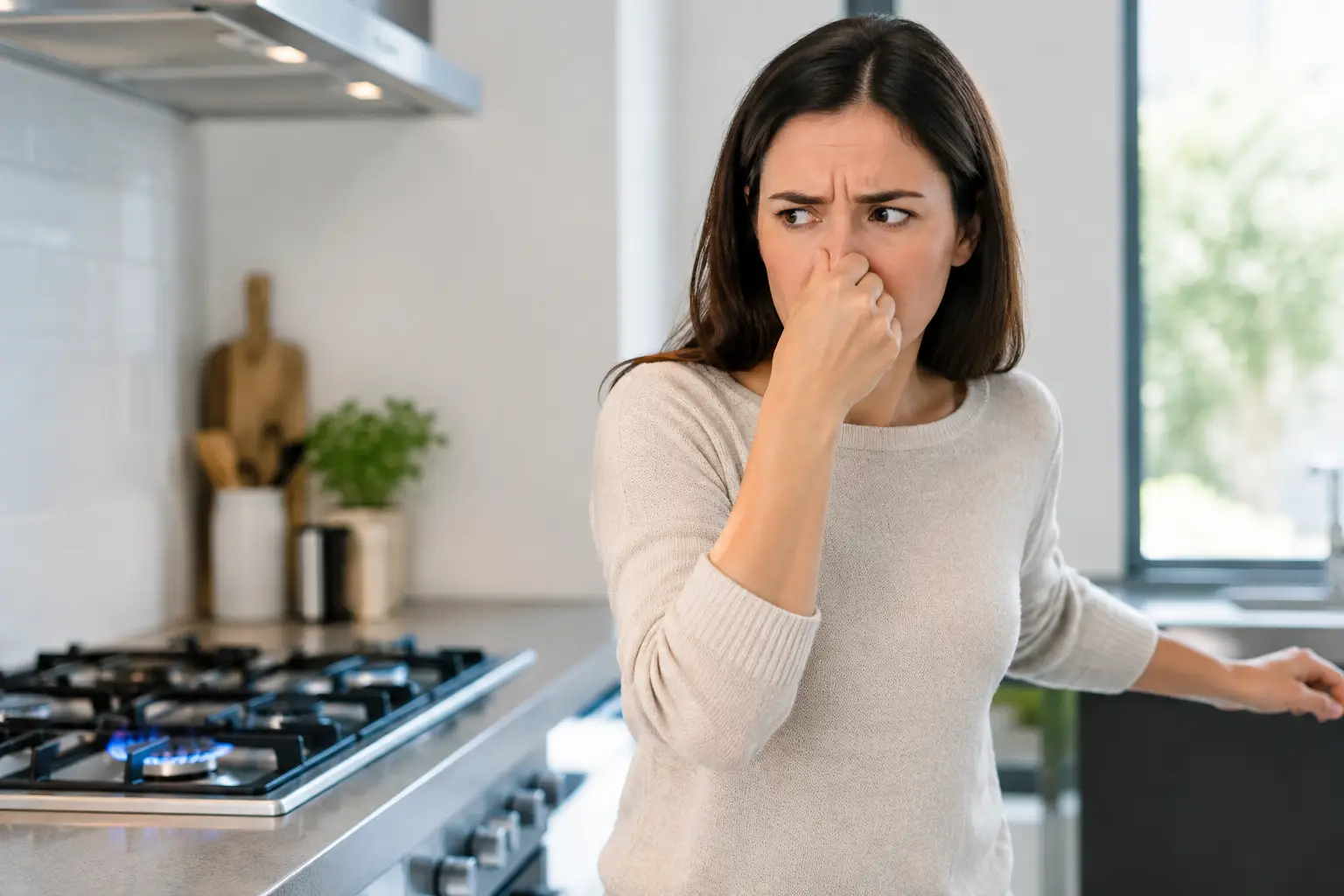
That sulphur-like, rotten-egg smell near your cooktop, hot-water system or gas heater is not something to wait and see about. If you smell gas in house, treat it as a possible gas leak until a licensed gas fitter has checked the system. The right actions in the first few minutes can prevent a dangerous ignition, protect the people inside and limit disruption to your property.
Smell gas in house? Leave first, investigate later
Natural gas has an odour added to it so leaks can be detected. LPG gas from bottles also has a strong odour and can settle in low areas because it is heavier than air. Either way, do not try to find the source yourself by checking fittings, using a flame, or pulling apart an appliance.
If the smell is strong, you hear a hissing sound, or anyone feels unwell, get people and pets outside immediately. Move away from the building and keep clear of the area around the gas meter or LPG cylinders. Once you are at a safe distance, call 000 if there is an immediate danger, fire, injury or significant leak.
A faint smell can still require urgent attention. Gas can build up inside cupboards, roof spaces, under floors or poorly ventilated rooms before it becomes obvious. Do not assume it is safe simply because the smell comes and goes.
What to do immediately
Keep the response simple and avoid creating a spark. Do not turn lights, fans, exhaust systems or power points on or off. Do not use a mobile, landline, doorbell, garage remote, vehicle or any electrical device inside the property. Do not smoke, light a match, use a lighter or start a barbecue nearby.
If it is safe to do so without entering the affected area or passing through a strong gas smell, turn off the gas supply at the meter or LPG cylinder valve. Only do this if you know where the shut-off valve is and can reach it safely. Never force a stuck valve, use tools on it, or put yourself at risk to shut it off.
Open doors and windows on your way out if they can be opened manually and without operating electrical equipment. Do not stay behind to ventilate the home. Your priority is getting everyone out and arranging professional help.
From outside, contact your gas network's emergency service and a licensed gas fitter. If you rent, notify the landlord or property manager as soon as practical, but do not wait for approval before making the situation safe. For strata and commercial properties, alert the building manager after the emergency call has been made.
Do not switch the gas back on
Once the gas has been shut off, leave it off. Turning the supply back on without identifying the fault can allow gas to escape again. A licensed gas fitter needs to locate the leak, repair it correctly, test the installation and confirm it is safe before any appliance is returned to service.
Where gas smells commonly come from
The source is not always the appliance closest to the odour. Gas pipework can run through walls, ceilings, cupboards and under floors, while a fault at one connection may be noticed in another room.
Common causes include a damaged flexible gas hose behind a cooker, a loose appliance connection, a failed bayonet fitting, deteriorated pipework, a faulty gas regulator, or a leaking LPG cylinder valve. A pilot light that has gone out, an unlit burner knob or a gas appliance with an ignition fault can also release gas. In older properties, previous alterations or unapproved work can create hidden compliance and safety issues.
Outdoor gas appliances deserve attention too. Gas barbecue points, pool heaters, outdoor kitchens and LPG bottles can leak around hoses, regulators and valves. If the smell is outdoors but close to open windows, doors or air-conditioning intakes, keep people away and have it checked promptly.
Gas smell or carbon monoxide? Know the difference
A gas odour is a clear warning sign, but not every gas-related problem smells the same. Carbon monoxide is colourless and odourless. It can be produced when a gas heater, hot-water system or other gas appliance is not burning fuel properly or is not venting safely.
Headaches, dizziness, nausea, tiredness, confusion or flu-like symptoms that improve when you leave the building can indicate carbon monoxide exposure. If more than one person feels unwell, or symptoms occur while a gas heater or other appliance is running, switch it off only if this can be done safely, get outside and seek urgent medical advice. Call 000 if symptoms are severe or someone has collapsed.
Do not rely on your sense of smell to rule out a carbon monoxide issue. Proper appliance servicing, ventilation checks and gas safety testing are the reliable way to identify a combustion fault.
What a licensed gas fitter will check
A professional gas leak inspection is more than spraying fittings and hoping the problem is visible. The gas fitter will first make the site safe, isolate the relevant supply where required and assess the condition of the meter, regulator, pipework and connected appliances.
Fault finding may include pressure testing the gas line to confirm whether the system is holding pressure, checking joints and valves with approved detection methods, inspecting flexible connections, and testing appliance operation. For a gas hot-water unit, heater or cooktop, the technician may also inspect burner performance, flueing, ventilation and safety controls.
The repair depends on what has failed. It may be as straightforward as replacing a compliant hose, regulator or valve. In other cases, corroded underground pipework, damaged copper pipe or an unsafe appliance connection may need replacement. A quality repair includes retesting the system after the work is complete, not simply tightening a fitting and leaving.
For homes and businesses across Western Sydney, South-West Sydney, the Hills District and North-West Sydney, Tru Blu Plumbing Group can provide licensed gas fault finding, repairs and clear advice on the safest next step. If a component needs replacement, you should be told what has failed, why it needs attention and what the repair involves before work proceeds.
Can you stay in the house after smelling gas?
It depends on the cause, how strong the smell is and whether the gas supply has been safely isolated. You should not re-enter a property with a continuing gas smell, and you should not use gas appliances until they have been checked.
Where a minor issue has been isolated, such as a defective appliance hose, a licensed gas fitter may be able to make the property safe while arranging a replacement or further work. If there is a significant leak in pipework, extensive repairs may be necessary before gas can be restored. In a rental, the property may require urgent repairs under the landlord's maintenance obligations, but safety still comes before convenience.
Preventing another gas emergency
Gas systems are generally dependable when they are installed correctly and maintained by licensed tradespeople. Regular servicing is especially worthwhile for gas heaters, continuous-flow hot-water systems, older cooktops and commercial appliances that receive heavy use.
Keep combustible materials away from gas appliances, avoid storing items around the hot-water unit, and do not bend, crush or modify flexible gas hoses. If you are renovating, installing a new cooker, moving a heater or converting appliances, use a licensed gas fitter rather than treating the gas connection as a DIY job.
If you notice a gas smell once, do not wait for it to become stronger. Get outside, avoid anything that could create a spark, and arrange a professional gas safety inspection before your home or business returns to normal.