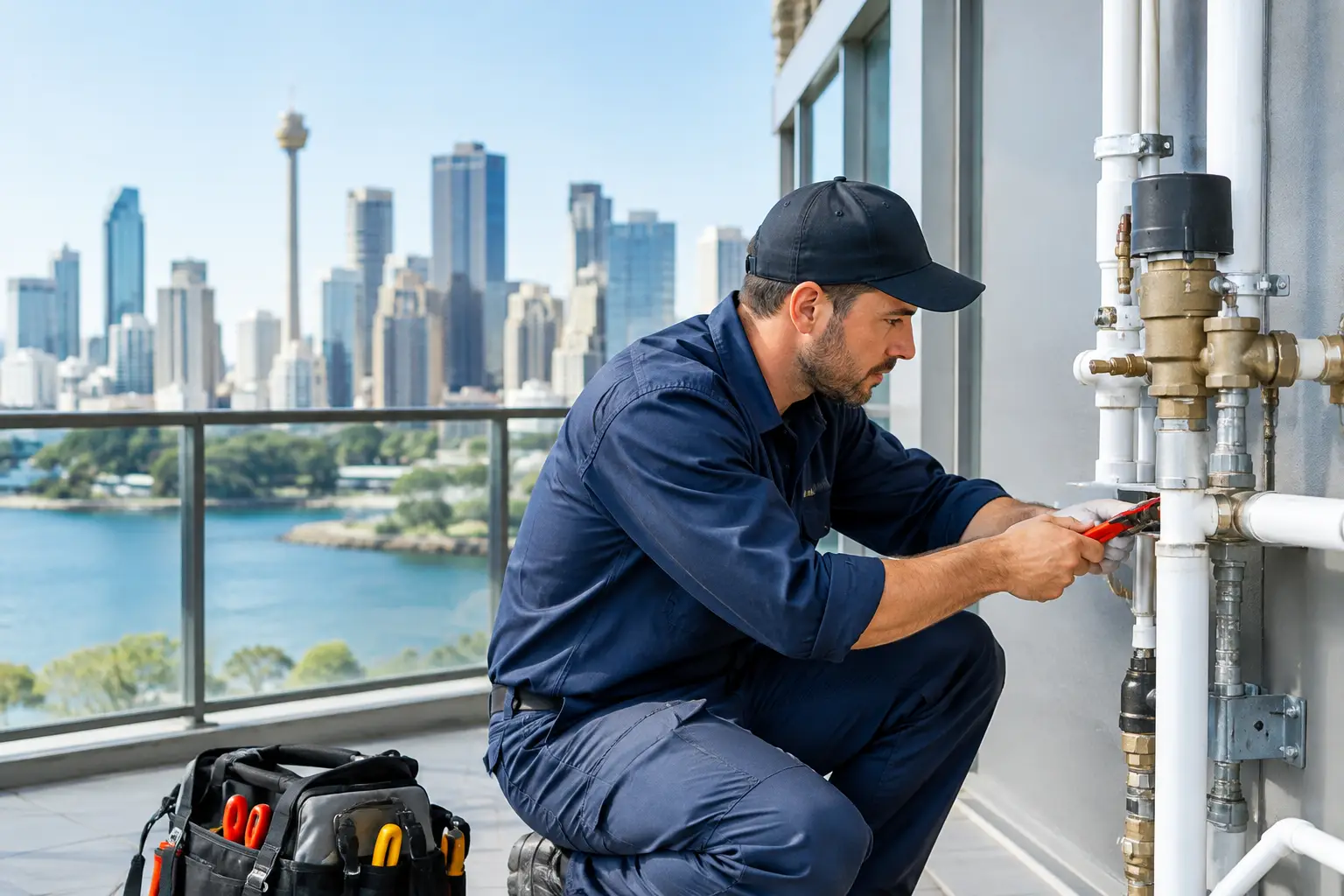
A blocked sewer line in a strata building is never just one resident’s problem. It can affect shared pipes, ground-floor units, common areas, insurance claims and the committee’s budget within hours. Reliable strata plumbing means acting quickly, identifying exactly where the fault sits and giving managers clear information before a small issue becomes a building-wide disruption.
For strata managers, committees and landlords, the challenge is not simply finding a plumber. It is finding a licensed team that can respond, diagnose the problem properly and communicate what needs to happen next without adding confusion to an already urgent situation.
Why strata plumbing needs a different approach
Strata properties have more moving parts than a standalone home. A leak may begin in one apartment but travel through a shared riser, ceiling cavity or common drainage line. A toilet blockage might be caused by misuse in one lot, tree roots in the main sewer or a damaged pipe beneath common property.
That is why assumptions can be costly. Sending a technician to clear the nearest fixture may restore flow temporarily, but it will not solve a cracked sewer, a root intrusion or a failed connection further down the line. Proper fault finding matters, particularly where several residents report slow drains, gurgling fixtures, sewage smells or recurring overflows.
The responsibility for repairs can also vary. In NSW strata schemes, whether a pipe, fitting or area is lot property or common property depends on the strata plan and the circumstances of the defect. Your managing agent, strata committee and insurer may need specific evidence before approving further work. A detailed diagnosis, photos and clear scope of works give everyone a stronger basis for making the right decision.
The plumbing problems that demand fast action
Some maintenance can be planned. Others cannot wait for the next committee meeting. Water escaping inside walls, sewage backing up through a ground-floor toilet or a failed hot-water system serving multiple residents needs immediate attention.
Common urgent strata plumbing issues include burst pipes, overflowing toilets, blocked main drains, sewer backups, gas leaks, major water leaks and failed shared hot-water equipment. Each can cause property damage, interrupt essential services and expose residents to health or safety risks.
When there is an active leak, isolate the water supply if it is safe to do so. Keep residents away from wet electrical areas, avoid using affected fixtures and arrange an emergency plumber. For a suspected gas leak, turn off the gas at the meter only if it is safe, do not operate electrical switches or flames nearby, and contact a licensed gas plumber urgently.
Fast attendance is important, but so is a controlled response. The first priority is to stop the immediate damage. The next is to determine the cause and explain the repair options, likely impact on residents and any access requirements.
How professional strata plumbing diagnosis saves money
Repeated call-outs are often a sign that the underlying fault has not been located. This is where specialist equipment changes the outcome.
CCTV drain inspections
A CCTV drain inspection places a purpose-built camera inside the pipework to show what is actually happening below ground or within inaccessible lines. It can identify tree roots, collapsed sections, cracked pipes, displaced joints, grease build-up and foreign objects.
For a strata manager, the value is clear: instead of guessing which section needs repair, you can see the condition and location of the issue. This helps with maintenance planning, quoting, committee approvals and insurer documentation. It also reduces the risk of spending money on repeated drain clearing when a repair or replacement is the more sensible long-term option.
High-pressure drain cleaning
High-pressure water jetting is highly effective for clearing grease, silt, roots and stubborn debris from sewer and stormwater drains. Unlike a basic plunger or temporary chemical treatment, high-pressure drain cleaning cleans the internal pipe walls and can restore better flow through the line.
It is not a cure for every problem. If a pipe has collapsed or has severe structural damage, jetting may clear enough debris to inspect the line but repair work will still be required. A good plumbing team will explain that distinction upfront rather than presenting a temporary clearance as a permanent fix.
Leak detection and pressure testing
Water stains, mouldy odours and unexplained increases in common water use should be investigated early. Hidden leaks can travel well away from their source, particularly in multi-level buildings. Pressure testing and targeted leak detection help narrow down the fault before unnecessary walls, ceilings or paving are opened up.
Preventive maintenance for strata buildings
Emergency work will always be part of managing a property, but a planned maintenance programme can reduce the frequency and severity of major failures. This is particularly useful for older apartment blocks, townhouses with mature trees or commercial strata sites with high daily water use.
A practical schedule may include regular inspection and cleaning of common sewer and stormwater drains, CCTV condition reports for known problem lines, testing of shared hot-water systems, checking exposed pipework for corrosion and servicing gas appliances where required. The right frequency depends on the building’s age, occupancy, drainage layout and history of blockages.
Tree roots deserve particular attention in established Sydney suburbs. Roots naturally seek moisture and can enter old clay pipes or compromised joints. Once inside, they trap toilet paper and waste until drains begin to slow or overflow. Scheduled inspection and drain cleaning can catch root growth before residents are dealing with sewage inside their units.
Preventive work also gives committees better financial control. A documented pipe condition report can help prioritise repairs over several budget cycles instead of forcing a rushed, expensive decision after a major failure.
Clear communication keeps residents informed
Strata plumbing work often requires access to more than one lot. A blocked stack may need technicians to inspect units above and below the reported issue. A water leak may require the water supply to be shut off while a repair is completed. Clear notices and a realistic scope of work make these disruptions easier to manage.
Before work begins, managers should know what the plumber has found, which areas require access, whether services need to be isolated and what residents should avoid using. After the work, they should receive a clear explanation of what was done, what was found and whether further repairs or monitoring are recommended.
Transparent pricing is equally important. Emergency work sometimes needs to begin immediately to limit damage, but the next stage should be clearly scoped where possible. This allows the strata manager or committee to understand the immediate safety repair separately from longer-term sewer replacement, pipe relining or restoration work.
Choosing a plumber for strata work
Strata jobs reward preparation and experience. Look for a fully licensed and insured plumbing company with the capacity to handle urgent call-outs as well as planned maintenance. Specialist drainage equipment, including CCTV cameras and high-pressure jetters, is important where common sewer and stormwater systems are involved.
Just as importantly, choose a team that understands the reporting requirements of property managers and committees. Clear findings, photos, repair recommendations and prompt communication help managers act with confidence.
For properties across Western Sydney, South-West Sydney, the Hills District and North-West Sydney, Tru Blu Plumbing Group provides emergency response, drainage diagnostics, sewer repairs, hot-water work and ongoing maintenance for strata properties. The focus is straightforward: locate the fault, explain the options and complete quality work with minimal disruption to residents.
When a repair becomes a replacement
There is a point where repeatedly clearing or patching a line stops being cost-effective. A CCTV inspection may reveal widespread cracking, recurring root entry, collapsed pipework or sections with poor fall. In those cases, targeted sewer repair, pipe relining or full replacement may offer better value than regular emergency call-outs.
The right option depends on pipe condition, access, budget and how long the building needs the repair to last. Relining can be less disruptive in suitable pipes because it may avoid extensive excavation. Replacement may be the better choice where the pipe has collapsed, has major alignment issues or needs significant changes to its layout.
Do not wait for the next overflow to find out whether a recurring drainage issue is structural. Arrange a professional assessment while the system is still usable. Early evidence gives your strata committee time to plan, obtain approvals and protect both residents and the building’s long-term budget.