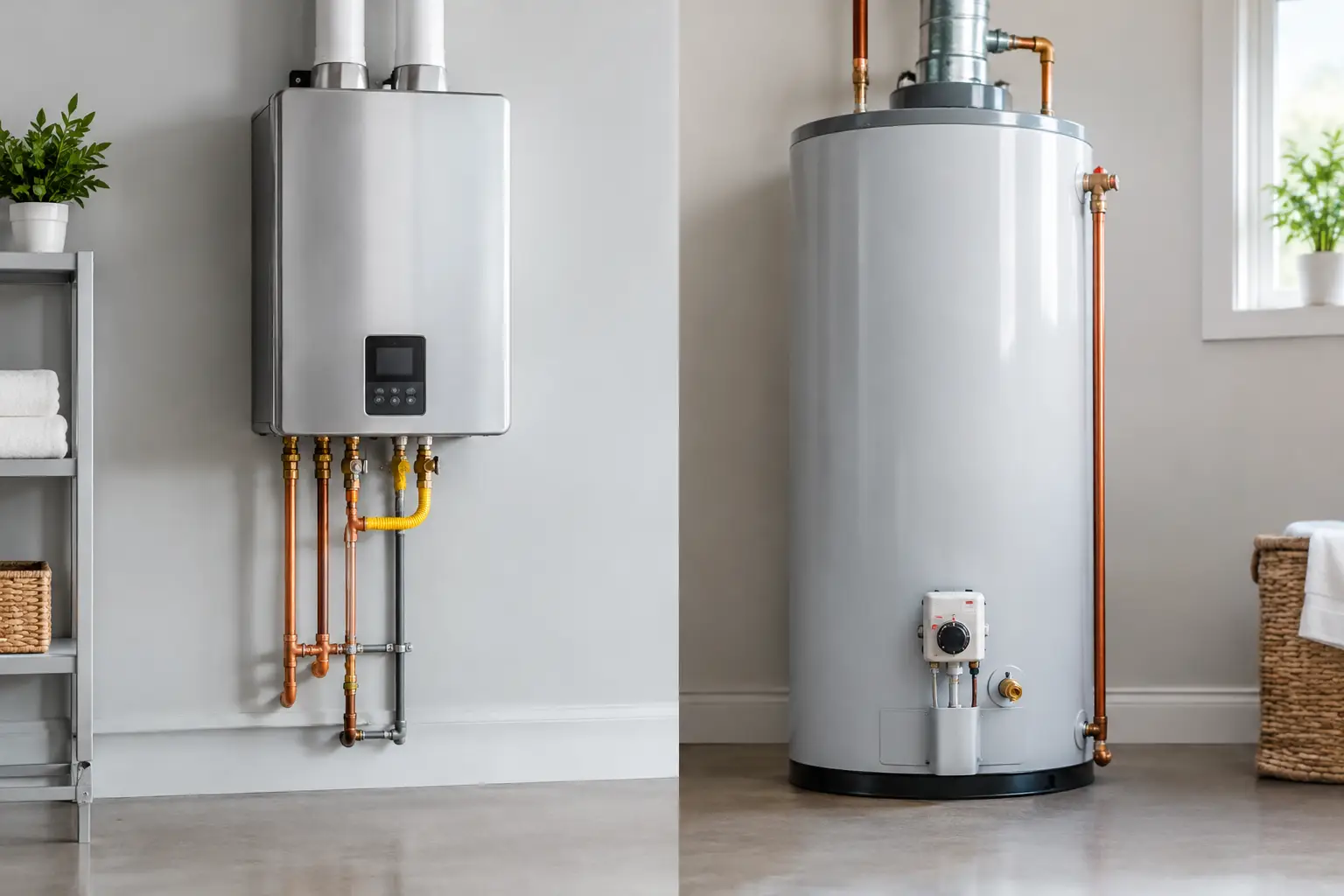
A failed hot-water system rarely gives you a convenient warning. One morning the shower runs cold, the pilot will not stay lit, or water is pooling around an ageing cylinder. When replacement is on the cards, the tankless versus storage decision affects more than the unit you buy. It changes how much hot water your household can draw at once, where the system can be installed, and what the job costs now and over the years ahead.
For Sydney homeowners, landlords and property managers, there is no single winner. The right system depends on household size, existing gas and electrical services, available space, hot-water habits and the condition of the old installation. A licensed plumber can assess these details before a system is selected, rather than fitting a unit that looks suitable on paper but disappoints in daily use.
Tankless versus storage: the key difference
A tankless system, commonly called a continuous-flow hot-water system, heats water only when a hot tap is opened. Cold water passes through a heat exchanger and is heated on demand. Most continuous-flow units in Australian homes are gas-fired, although electric models are available for selected applications.
A storage hot-water system heats and holds a set volume of water in an insulated tank. That tank may be powered by gas or electricity, while heat-pump systems use electricity to extract heat from the surrounding air. Once the stored water is used, the system needs time to recover and heat the next tankful.
That basic difference drives nearly every practical trade-off. Continuous flow provides a long supply while fuel and water are available, but its output is limited by the unit's flow rate. Storage provides a known quantity of water at high demand, but the household can run it down.
When a tankless system makes sense
Continuous-flow hot water is often a strong option for homes where space is tight. The compact unit is generally wall-mounted outside, avoiding the footprint of a large tank in a laundry, side passage or cupboard. For a townhouse, apartment or smaller home, recovering this space can be a genuine benefit.
It also suits households with staggered showers and consistent daily use. A correctly sized gas continuous-flow system can supply hot water for back-to-back showers without waiting for a tank to reheat. Because it does not keep a full tank hot throughout the day and night, it can reduce standby energy losses.
The important words are correctly sized. A unit's advertised litres-per-minute rating is not an unlimited supply. Incoming water temperature, desired outlet temperature, water pressure and the number of fixtures operating at once all affect real performance. Sydney's winter mains water is cooler than summer water, so a system must work harder to achieve shower temperature.
For example, a family running two showers, a kitchen tap and a washing machine at the same time may find a smaller continuous-flow unit cannot maintain the preferred temperature or flow at every outlet. A plumber should calculate likely simultaneous demand rather than simply replacing an old unit with the closest-looking model.
There can also be installation constraints. Upgrading from storage to continuous flow may require alterations to the gas line, regulator, flue arrangement, water pipework and electrical supply for ignition. Gas pipe sizing is particularly important. An undersized gas line can restrict performance and may prevent the new appliance operating as intended.
Where storage hot water remains the practical choice
Storage systems are far from outdated. They remain a reliable choice for many homes, particularly where the property already has suitable connections and the household has predictable peak demand. A larger storage tank can handle several showers in a busy morning period, provided its capacity and recovery rate suit the household.
Gas storage units usually recover faster than conventional electric storage models. Electric storage can be cost-effective in the right tariff arrangement, although households need to understand when the system heats and how long it takes to recover after heavy use. A heat-pump storage system can be very energy efficient, but it needs adequate outdoor space, correct placement and consideration of operating noise.
Storage can also be the easier replacement where an existing tank is reaching the end of its life. If the location, pipework and energy source are already appropriate, replacing like-for-like may reduce labour and avoid wider alteration work. That can be valuable for landlords who need to restore hot water quickly or strata properties where space and service changes are restricted.
The compromise is capacity. If a tank is too small, the last person through the shower line may get lukewarm water. If it is much larger than the household needs, you pay to heat water that is not being used. An appropriately sized tank is more important than simply choosing the largest model available.
Upfront cost versus ongoing cost
The cheapest unit to purchase is not always the lowest-cost choice over its service life. A straightforward storage replacement may have a lower upfront installation cost than converting to continuous flow, particularly when no pipework changes are required. However, an older or inefficient tank may cost more to operate because it continuously replaces lost heat.
Continuous-flow gas systems avoid most standby losses, but gas consumption depends on usage patterns and the appliance efficiency. A household with modest, irregular hot-water use may benefit more from on-demand heating than a household with frequent high-flow use across multiple bathrooms.
Energy prices also matter. Electricity and gas costs vary by retailer, tariff and household setup. Solar can change the equation for electric or heat-pump storage systems, especially where heating can occur during solar production. This is why a good recommendation starts with the property and household, not a blanket claim that one technology is always cheaper.
Ask for a clear quote that separates the appliance price from labour, valves, tempering requirements, disposal of the old unit, gas or electrical alterations and any necessary upgrades. Transparent pricing lets you compare the complete installation, not just a headline system price.
Sizing the system for your property
The number of bedrooms is only one clue. A two-bedroom home with two occupants and one bathroom has very different demand from a two-bedroom home with four occupants, two bathrooms and a large bath. A plumber will also consider shower heads, the number of outlets likely to operate together, laundry use and whether the property has a high-flow rain shower or spa bath.
For continuous-flow systems, sizing centres on peak flow demand. For storage systems, it centres on tank capacity and recovery time. Both require attention to water pressure and existing pipework.
Temperature control is another safety consideration. Stored hot water is commonly kept at a higher temperature to control bacteria, then mixed down through a tempering valve for bathroom outlets. Faulty tempering valves can cause water that is too hot, too cold or inconsistent. Continuous-flow systems also require correct temperature settings and compliant installation to deliver safe, stable hot water.
Signs it is time to replace rather than repair
Not every fault means a full replacement is needed. A professional fault-finding visit may identify a failed thermostat, heating element, gas control, pressure relief valve, igniter or tempering valve that can be repaired. Acting early can prevent a small issue becoming a complete loss of hot water.
Replacement is often the sensible path when a storage tank is corroded or leaking, repairs are becoming frequent, parts are no longer economical, or the system is well beyond its expected working life. Rust-coloured water, moisture around the base of a tank, rumbling noises and inconsistent temperatures all deserve prompt attention. Do not ignore a leaking tank in a cupboard or internal laundry - water damage can spread quickly through floors, cabinetry and adjoining units.
If you smell gas, notice a strong burning smell, see discoloured pipework around a gas appliance or suspect a gas leak, turn off the appliance if it is safe to do so, keep ignition sources away and arrange urgent licensed assistance. Hot-water work involving gas, electrical connections or plumbing modifications should never be treated as a DIY job.
Make the choice with the installation in view
The best tankless versus storage choice is the one that delivers dependable hot water at your busiest time, fits the property safely and does not create avoidable installation costs. Before committing, have the existing system, gas supply, water pressure, available space and household demand checked on site.
For homes and investment properties across Western Sydney, Tru Blu Plumbing Group can assess hot-water faults and replacement options, explain the practical trade-offs in plain English and carry out the installation with licensed workmanship. If your system is leaking, failing to ignite or leaving the household without hot water, arranging an inspection early gives you more choice than waiting for a complete breakdown.