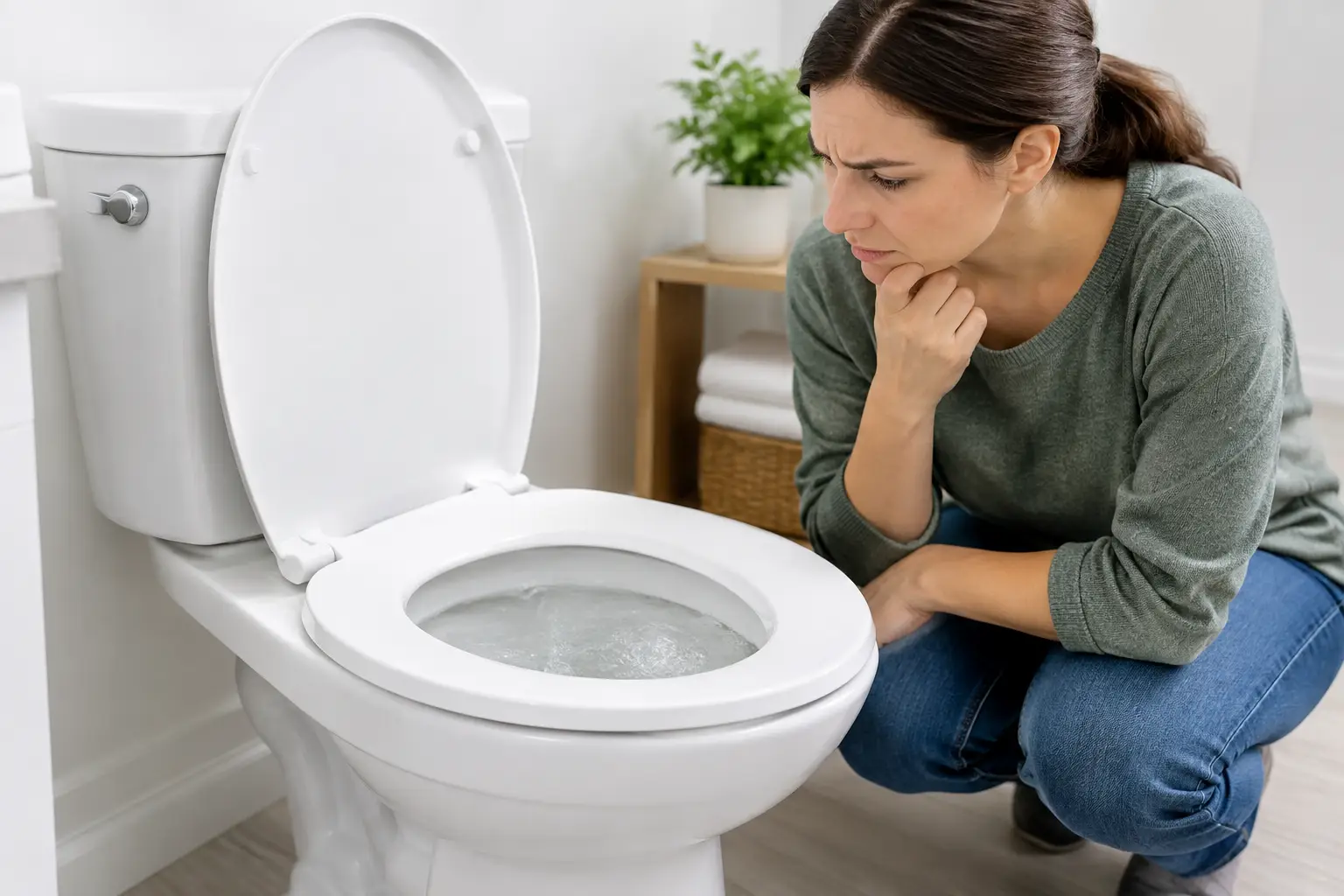
A toilet that gurgles after flushing, or bubbles when someone runs the shower or washing machine, is usually warning you about a drainage problem. Toilet gurgling causes often start with trapped air in the pipework, but the reason that air cannot move freely needs to be found before a slow drain turns into an overflow or sewer backup.
A one-off sound after a heavy flush is not always an emergency. Repeated gurgling, however, should not be ignored, especially if water levels in the bowl rise and fall, other fixtures are slow to drain, or there is a sewage smell inside or outside the property.
Why a toilet gurgles
Your plumbing system needs two things to work properly: a clear path for wastewater to drain away and enough airflow to balance pressure in the pipes. When water moves through a drain, it pushes air ahead of it and creates suction behind it. Vent pipes, usually running up through the roof, allow that air to move safely.
If a partial blockage or vent fault restricts the system, air looks for another route. The toilet bowl is often the easiest opening, so you hear bubbling or gurgling as air is forced through the water in the trap. The sound may happen during a flush, but it can also occur when a bath drains or a dishwasher pumps out.
The important point is that the noise is a symptom, not the fault itself. Clearing the visible toilet bowl does not necessarily clear a blockage further down the sewer line.
The most common toilet gurgling causes
A partial blockage in the toilet or branch drain
Too much toilet paper, sanitary products, wipes, cotton buds or other items can create a partial obstruction in the toilet trap or the drain immediately beyond it. Even products labelled as flushable can catch in older pipework and build up over time.
Water may still get through, which is why the toilet can appear to flush normally at first. As the opening narrows, air and wastewater move unevenly through the pipe, causing gurgling, weak flushing and occasional bowl level changes. A plunger may help with a minor, local blockage, but repeated symptoms usually mean the obstruction is further along the line.
A blocked sewer drain
When several fixtures are affected, the issue is more likely in the main sewer drain rather than the toilet itself. You may notice the toilet bubbling when the shower, basin or washing machine drains. In more serious cases, flushing the toilet can send wastewater into a shower recess, floor waste or outside gully.
In Western Sydney and surrounding growth areas, tree roots are a frequent cause of sewer blockages. Roots enter through fine cracks or pipe joints in search of moisture, then trap paper and waste until the drain is restricted. Older earthenware pipes, displaced joints, cracked PVC and sections with poor fall can create the same result.
This needs professional fault finding. A licensed plumber can use high-pressure drain cleaning to clear the line, then carry out a CCTV drain inspection to confirm whether roots, damage or a recurring pipe defect is behind the blockage.
A blocked or damaged sewer vent
A vent pipe allows pressure to equalise as water moves through the drainage system. If it is blocked by leaves, nesting material or debris, the system may pull air through fixture traps instead. That can make a toilet gurgle and may also cause odours from basins, showers or floor wastes.
Vent faults are less common than drain blockages, but they are not a DIY roof job. Access can be unsafe, and the fault may not be obvious from ground level. A plumber can inspect the drainage system and determine whether the issue is a vent restriction, a drain blockage or a combination of both.
A sewer pipe that is damaged, sagging or incorrectly installed
A drain does not have to be fully blocked to cause trouble. A cracked pipe can allow roots and soil into the line. A sagging section, sometimes called a belly, holds wastewater and solids instead of carrying them away. Poorly installed or altered pipework may also lack the correct fall.
These faults tend to cause recurring gurgling and repeat blockages. Clearing the drain may restore flow temporarily, but the problem returns because the pipe itself is compromised. CCTV drain inspections are particularly useful here because they show the exact condition and location of the underground sewer before repair options are recommended.
A problem beyond your property boundary
If neighbours are experiencing similar drainage issues, or the problem affects several dwellings in a strata complex, the fault may sit in a shared line or the local sewer network. Property boundaries and responsibility can vary, so it is worth getting a professional assessment first. Clear evidence from a CCTV inspection helps identify where the issue starts and what needs to happen next.
When toilet gurgling needs urgent attention
Call for urgent plumbing help if the toilet is close to overflowing, wastewater is coming up through a floor waste or shower drain, or sewage is backing up into the building. Stop using toilets, showers, washing machines and taps where possible. Every extra litre sent into a blocked drain can increase the chance of contaminated water entering living areas.
You should also act quickly if the bowl water level drops unusually low after gurgling. The water in the toilet trap acts as a seal against sewer gases. If that seal is disturbed, unpleasant odours may enter the room.
For landlords, strata managers and property managers, early action protects both the property and occupants. A small drainage warning can become an after-hours overflow, damaged flooring, tenant disruption and a more expensive clean-up if it is left too long.
What you can safely check before a plumber arrives
First, take note of when the gurgling occurs. Does it happen only when the toilet flushes, or when other fixtures drain? Are there slow drains, bad smells, water around the outside gully or a history of tree-root blockages? These details help narrow down the likely fault.
If the toilet water is high, do not flush it again. Turn off the isolation valve behind or beside the toilet if the cistern continues filling, and keep children and pets away from any wastewater. You can use a standard toilet plunger only where there is no sign of sewage backup elsewhere and the blockage appears minor.
Avoid pouring chemical drain cleaners into the toilet. They rarely solve a sewer blockage, can damage pipework or seals, and create a hazard for anyone working on the drain afterwards. Do not attempt to access roof vents or force a drain rod through the toilet, as this can crack the porcelain or push the blockage deeper.
How professionals identify the real cause
A proper diagnosis starts with checking which fixtures are affected and inspecting accessible drainage points. Depending on the symptoms, a plumber may use drain equipment to test the line, clear the obstruction with high-pressure water jetting, and inspect the sewer with a CCTV drain camera.
High-pressure drain cleaning removes built-up waste, roots and debris without relying on harsh chemicals. The CCTV inspection then confirms whether the pipe is sound or whether there is a crack, root intrusion, displaced joint or collapsed section requiring repair. This approach avoids guesswork and helps prevent the same problem returning a few weeks later.
Tru Blu Plumbing Group provides drainage fault finding, CCTV drain inspections and high-pressure drain cleaning across Greater Sydney, including Western Sydney, South-West Sydney, the Hills District and North-West Sydney. Licensed technicians can explain what has caused the problem, what work is needed and the available repair options before proceeding.
Preventing another gurgling toilet
Only flush human waste and toilet paper. Keep wipes, sanitary items, paper towel, dental floss, cotton buds and food scraps out of the toilet, even if packaging suggests they can be flushed. If your property has mature trees near the sewer route or a history of blocked drains, planned maintenance and occasional camera inspections can be far cheaper than dealing with a major backup.
A gurgling toilet is one of those problems that rarely improves by itself. If the sound keeps returning, treat it as an early chance to get the drain checked, clear the fault properly and avoid sewage where it does not belong.