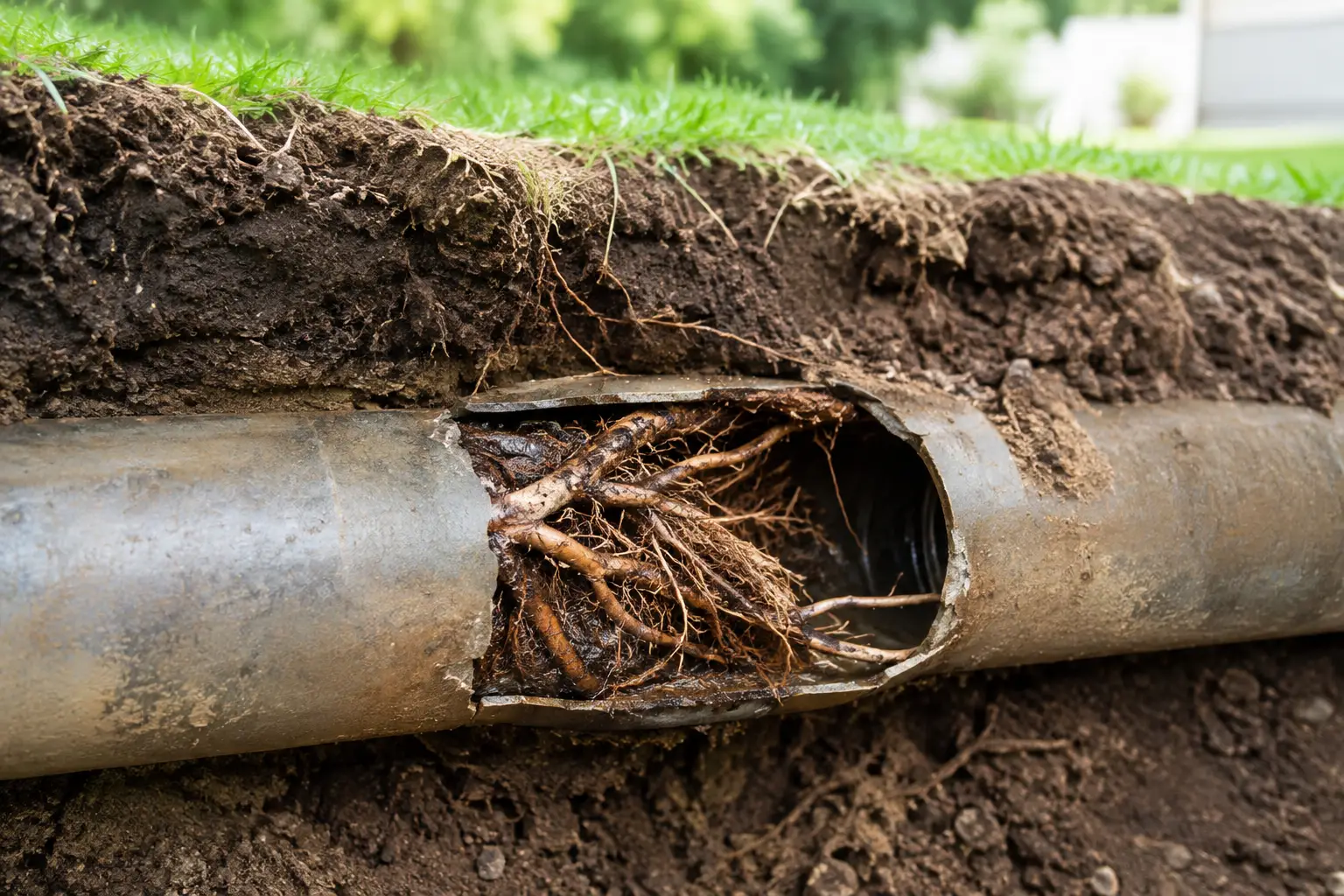
A drain that clears, then blocks again a few weeks later, is often telling you something more serious than a simple build-up. Tree roots in sewer pipes are a common cause of repeat drain blockages across Sydney properties, particularly in established suburbs with mature trees and older clay or concrete drainage lines. Left alone, the problem can progress from slow drainage to sewage overflow, pipe collapse and costly damage to the property.
Roots do not need a large opening to get into a sewer line. They can enter through tiny cracks, ageing pipe joints or broken sections, then grow quickly once they find moisture and nutrients. The result is a blockage that will not stay fixed with a plunger or off-the-shelf drain product.
Why tree roots get into sewer pipes
A healthy, fully sealed sewer pipe should keep roots out. In reality, many older pipes have joints that have shifted over time, small fractures caused by ground movement, or sections damaged by age and corrosion. Roots are naturally drawn towards the moisture escaping from these weak points.
Once inside, fine roots form a web that catches toilet paper, wipes, grease and other debris travelling through the line. As the mass grows, wastewater has less room to pass. A partial blockage may first show up as a gurgling toilet or a shower that drains slowly. Eventually, the sewer can back up into a floor waste, toilet or outdoor gully.
It is worth being clear about one point: roots do not usually crush an undamaged pipe simply by growing beside it. They find and exploit an existing defect. That is why clearing the roots without checking the condition of the pipe can lead to the same blockage returning.
Signs of tree roots in sewer pipes
A single slow drain can be caused by soap, hair or localised waste near a fixture. When several fixtures are affected, or the problem keeps returning, the blockage is more likely to be in the main sewer line. Watch for toilets that gurgle when water runs elsewhere in the home, foul odours around drains, water pooling near an outside gully, or wastewater rising from a floor drain.
Repeated call-outs for the same drain are another major warning sign. If a drain has been cleared more than once and the issue comes back, do not keep treating it as a routine blockage. The line needs proper fault finding.
Properties with large trees near the house, old terracotta or clay pipework, and long-established gardens are at greater risk. However, roots can travel well beyond the visible canopy of a tree, so the nearest tree is not always the cause. A CCTV drain inspection is the reliable way to see what is happening underground.
Why a quick fix may not be enough
Pouring chemical drain cleaner down the line is not a dependable fix for root intrusion. These products rarely remove a substantial root mass, can be hazardous to handle and may damage pipework or create risks for anyone who later works on the drain. Root-killing treatments can also be temporary and should not replace a professional inspection and repair plan.
A drain snake may punch a small passage through the roots and get water moving again. That can be useful in an urgent situation, but it does not necessarily remove the obstruction from the pipe walls. If roots remain attached inside a damaged joint, they will continue growing.
The right solution depends on the pipe material, the extent of root intrusion, the location of the defect and whether the pipe has lost its structural integrity. Good drainage work starts by identifying those facts, not guessing from above ground.
How a plumber repairs root-damaged sewer lines
CCTV drain inspection and fault finding
A CCTV drain inspection involves feeding a purpose-built camera through the sewer line to locate the root mass and assess the pipe condition. The footage can show whether roots are entering at one joint, through several cracks, or through a section that has sagged or collapsed.
This step matters because it avoids unnecessary excavation and helps determine whether cleaning, repair or replacement is the sensible long-term option. It also gives property owners, landlords and strata managers clearer information before approving works.
High-pressure drain cleaning
For many root blockages, high-pressure water jetting is used to cut through roots and flush debris from the line. Specialist jetting equipment can clean the internal surface of the pipe more effectively than basic cabling alone, restoring flow and allowing the plumber to inspect the damage properly.
High-pressure drain cleaning is often the fastest way to resolve an active blockage. But it is best viewed as part of the process, not always the final repair. If the camera inspection shows open joints or cracks, roots can return unless those entry points are addressed.
Targeted sewer repair or pipe relining
When damage is localised, a targeted repair may be enough. Depending on access and pipe condition, this can involve repairing the affected section or using pipe relining to create a new, joint-free lining inside the existing pipe. Relining can be a practical option where digging would disturb paving, landscaping or driveways, although it is not suitable for every drain.
The benefit is reduced excavation and a sealed internal pipe surface that makes future root entry far less likely. The trade-off is that severely collapsed pipes, major misalignment or extensive damage may need excavation and replacement instead.
Excavation and sewer replacement
If a sewer line is extensively cracked, crushed, badly displaced or beyond repair, excavation is usually the more reliable option. Replacing the failed section with modern pipework removes the damaged material and provides a sound long-term solution.
Excavation can be more disruptive upfront, especially where pipes run beneath concrete or landscaped areas. However, repeatedly clearing roots from a pipe that is structurally failing can cost more over time and leaves the property exposed to another overflow. A licensed plumber should explain the condition of the line, the available options and the expected scope before work begins.
What to do if sewage is backing up
If wastewater is overflowing from a toilet, floor waste or outdoor drain, stop using taps, toilets, washing machines and dishwashers where possible. More water entering the system can worsen the overflow. Keep children and pets away from contaminated areas, and avoid attempting to dismantle pipes or use harsh chemicals.
For a tenancy, notify the property manager or landlord straight away while arranging urgent plumbing assistance under the relevant maintenance process. For strata properties, the location of the blockage matters. A blockage within a private lot may be the owner's responsibility, while a common sewer line may require strata involvement. A camera inspection can help establish where the fault sits.
Sewage backup is not a problem to leave overnight if it is actively overflowing. Apart from the mess and odour, it can create hygiene risks and damage flooring, walls, contents and neighbouring areas.
Can you prevent roots from returning?
The most effective prevention is repairing the point where roots entered. Regular drain maintenance can also be worthwhile for properties with a known history of root intrusion, mature trees close to sewer lines or older drainage systems.
Avoid planting large, water-seeking trees directly over or close to known sewer routes where possible. Before major landscaping, extensions or new paving, consider locating the drainage line first. This is particularly useful for older homes where plans may not reflect changes made over decades.
Do not flush wipes, sanitary items, paper towel, fats or food scraps, either. These materials do not cause roots, but they catch on even small root growth and turn a manageable defect into a complete blockage much faster.
If your drains are slow, gurgling or repeatedly blocking, book a technician before the sewer overflows. Tru Blu Plumbing Group uses CCTV drain inspections and high-pressure drain cleaning to find the cause, explain the repair options clearly and get your drainage working properly again. Acting while the problem is still contained can protect your property, your budget and your peace of mind.